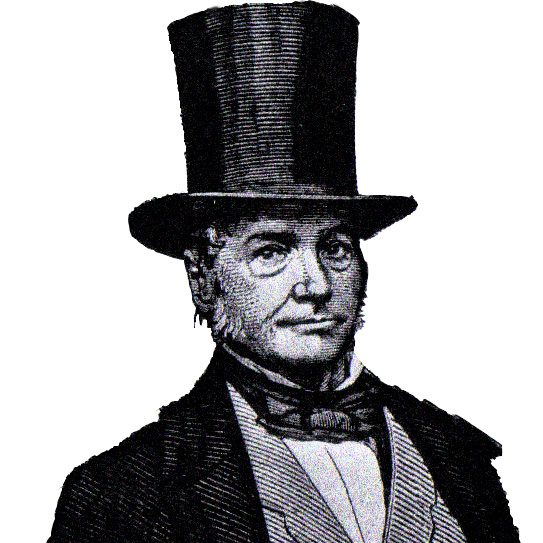

I have already alluded to the subject of the flinty-heartedness of the fraternity among whom I have so long laboured, and I may illustrate the same feature by another case, which is calculated as well to shew a peculiarity somewhat better known—the elasticity of their enjoyments, if the rant and roar of their mirth can go by a name expressive of a heartfelt affection.
Is there any reason in the world why thieves should not marry one with another? or rather, were we to bear in mind the words of the priest, importing the necessity of faith and confidence in each other, might we not rather expect that these celebrations should occur oftener than they do? The nature of the connexion might, indeed, suggest an addition to the formula, to the effect that they should be made to promise not “to peach” on each other; and as for the words, “Whom God hath joined together let no man separate,” these might be dispensed with, to save the judges and such as I from breaking a law of the Bible. The “duty,” “obedience,” and “affection” might remain as approved by experience. But however decorous these unions, (and pearls, you know, have been called unions, as well they might,) it is certain that we see very few of them. When they occur, they are very genuine, in so much as the contracting parties know each other,—a peculiarity almost entirely confined to their case; but, as I have said, they occur very seldom. They seem to have a sort of instinct that they are liable to changes of dwelling as well as changes of country, and hence their notion that it is better for both males and females to join their fortunes and affections in that loose and easy way, which enables them to snap the silken bands when it is necessary to assume the iron fetters.
So much of prosy prelude to that gay scene which occurred in Bailie’s Court, head of the Cowgate, in January 1855, when Richard Webb and Catharine Bryce were, amidst the strains of the Tam Lucas of the feast, made man and wife. That they knew each other was beyond doubt, for had not the gay Catharine been twice condemned for shoplifting, and Richard carried the honours of as many convictions for the minor crime of theft? Yes, it would be well for our Beatrices and Birons if they knew beforehand tempers so well developed. When did you ever hear of thieves disgracing themselves by going to the divorce courts? They are contented with the justiciary, or even the sheriff. They despise, too, restorations of tocher; and as for the one turning witness against the other’s frailties, you never hear of it.

This celebration, when I heard of it, appeared to me curious. I don’t say ludicrous, because marriage is an august ceremony, originated in Paradise, and so very often ending there. And why should not M‘Levy be among his children, to whose happiness he had devoted so many years of his life, of toil and danger? I know that you will say, Why should he not be there? And to be sure there he was. I got indeed no invitation, any more than I did when the handsome hawker was to have been joined, by a “closing thread” well birsed, to the disappointed snab. When people are insulted in this way, they get over it by calling it an oversight—yet they don’t put the parties right by going as I did, and shewing that degree of magnanimity which consists in heaping coals of fire on the head.
As Bailie’s Court, in the Cowgate, does not often respond to the strains of a marriage fiddle, there behoved to be a crowd, and it behoved that crowd to be witty at the expense of the happy pair; for when were not the poor, who form such crowds, envious? When I arrived, I found them all in that kind of uproar—hurraing at every newcomer—which characterises scenes of this nature; and my appearance quickened the humour into such bursts as “M‘Levy is to join them with handcuffs,” “Let up the priest,” “Where is your white cravat,” and the like—jokes which were really not happy, in so much as the nuptial knot had already been tied, and the sacred restraints of the guests were loosened to the extent of the freedom of dancing. On going upstairs, I found that all my suspicions of affront at not being invited were mocked by an open door for all comers, whence issued just such sounds of fiddle, feet, and fun, as one might expect. On my entry, there awaited me an honour which I believe would not have been awarded to the Lord Justice-Clerk; for my very appearance stopt the merrymakers when in full spring, just as if they were overawed by the appearance of a winged messenger. And no wonder, for I saw there many for whom I had procured lodgings, supplied with food, and even sent on an excursion to the sunny climes of the south; but no man has a right to enforce more gratitude than what is due to him, and I was vexed at throwing a cloud over so happy a scene.
“Go on, my lads and lasses,” said I. “You know you belong to me, but this night you shall have your liberty.”
“Give him a dram,” cried the bride.
And straightway, to be sure, I got my glass of whisky; but not content with that gift, they pulled me into the middle of a reel, where I am not sure if I did not actually dance,—nay, I won’t answer for it that I was not whirled round by some very passable arms, not only for good colour, but for softness.
I remained only for a short time. I had gratified my curiosity, and I wished to save them from the embarrassment of a presence in many ways suggestive of associations. I had not been disappointed; but I am sure that when I appeared again to the crowd without having Webb or Catharine with me, or at least some of the guests, they were disappointed—so envious, I am sorry to say, is that common nature of ours, and so impatient of the joys of others. Another thing gave a kind of satisfaction. I saw no chance for this celebration being disgraced by pocket-picking—an occurrence so common in crowds—for here truly there were no pockets to pick, that is, no pockets with anything in them, beyond a quid of tobacco and a pipe, or at most a few pence. You will see how this fond hope was destined to be disappointed.
Having joined my assistant, who waited for me at the foot of the stair, we went along to the Cowgate on the look-out; and having finished our survey, we turned to retrace our steps by the scene of the marriage. It was a frosty night, I remember, with thick snow, heaps of which were thrown up on the sides of the cart-ruts. As we were thus proceeding, I heard coming up the rapid steps of a runner; and who should this be but Bill Orr, one of my own. He stumbled against a heap of snow, and fell at my feet.
“What’s all the hurry, Bill?” said I, as he was getting up.
But Bill clearly did not like the question, far less did he like the anticipation of being laid hold of, for he was up in an instant and off, much quicker than a wind-driven snow-flake.
“Where’s the pursuer?” said I to my assistant; “Bill Orr is not the man to run at that rate to get out of the snow.”
The pertinency of the question was no more apparent to me, than to you, or any one who notices the common actions of mankind, which display a proportion in their vivacity corresponding to the degrees of impulse; nor did the notion leave me that something was wrong with my old friend, and I was accordingly on the outlook. On coming again to Bailie’s Court I was attracted by some noises, not at all like the fun I had witnessed before in that quarter; and on going forward, ascertained, from the lamentations of an old poors’-house pensioner—a very old woman, who in spite of her age and poverty had been attracted in that cold night by the festivity of the marriage—that she had been robbed; yes, a poors’-house pensioner robbed of the sum of four pennies and one halfpenny. Ludicrous enough; ay, but pitiful enough too, when you remember that that fourpence-halfpenny would keep, and was intended to keep, that very poor pauper a day out of the very few she would see on this side of the grave. Don’t wonder, therefore, at a grief which was intense, if it did not amount to as strong an agony as those shrivelled nerves could bear without snapping. I had here my sympathies; and if anything could add to my disturbance, it was that in spite of my hopes this auspicious wedding was disgraced.
“Be easy, my good woman,” said I; “I will get both your fourpence-halfpenny and the heartless rogue that took it.”
“God bless you, Mr M‘Levy; ye’ve saved mony a ane’s property, and ye’re sent here this night to save mine.”
And had she no right to think fourpence-halfpenny entitled to be designated property? It was at least her all; and when all is lost, it is, I suspect, of little importance whether it be a thousand pounds or a penny. Nor was she less miserable than one would be at the loss of a fortune,—only the tear was not there, perhaps because an out-door pensioner does not get nourishment with sap enough in it to produce that peculiar evidence (which is said to be limited to our species) of human grief.
And now there was another contrast between what was going on up-stairs and that which was enacted below. There, merriment was the produce of thieving; here, the offspring of the same parent was sorrow.
“Wait there, my good woman,” said I, “till I bring you your property and the thief.”
And upon the instant there arose a cry of, “Hurra for M‘Levy,” which I received with becoming modesty.
So away I went back the road I had come; nor did I diverge till I came to the house of Mrs M‘Lachlan, who sold beer and whisky to be consumed and to consume on the premises, where, in a room, surrounded by some of his own tribe, who should have been at the marriage, I discovered Bill Orr, with his own stoup before him, in all the confidence of security, and in all the joy of his fourpence-halfpenny.
“What was your hurry, Bill, when you fell?” said I. “You haven’t told me that yet.”
“Perhaps to get to this jug of ale in a cold night,” replied the rogue.
“No,” said I; “you wanted away from the poor old pensioner whom you robbed of fourpence-halfpenny.”
Bill was choked with the truth.
“Mrs M‘Lachlan,” continued I, “has Bill paid for his stoup?”
“Ay, I never trust till the ale’s drunk,” replied she; “for sometimes it taks awa’ the memory, and they get confused, and say they paid afore.”
“A penny the stoup?”
“Ay.”
“And therefore I expect there’s threepence-halfpenny in your pocket, Bill. Turn it out.” But he wouldn’t, and I was obliged to extract it.
“And now, Mrs M‘Lachlan,” said I, “though stolen money cannot be reclaimed, when I tell you that our friend Bill here stole it from the pocket of an old woman-pensioner, you’ll not refuse to repay it.”
“No, though it were a shilling,” replied she, as she put down the penny.
“Now there is one I shall make happy,” said I, as I put the money in my pocket, and taking Bill by the coat I carried him off, without even permitting him to finish his pot, the remaining contents of which would be a halfpenny to Mrs M‘Lachlan for her penny.
So pulling Bill along—I might safely have allowed him to walk between me and my assistant, but I felt some yearning to hold him tight—I took my “pearl of Orr’s Island1” to Bailie’s Court, where there waited for me my poor pensioner, as well as the crowd, who no doubt wanted to see whether I would fulfil my promise. The moment they saw Bill in my hands they raised three cheers, more grateful to me than the eclat of having recovered a thousand pounds. There stood the woman, and before her Bill, the personification of lusty youth preying on shrivelled old age; but Bill was as unmoved as a stone, and I thought of making him feel a little, if that were possible. I knew I had no right to give up the money, but I was inclined to make an exception, were it for nothing else than to save the credit of the thieves’ wedding.
“Now,” said I, “Bill, you will give this money to the woman to whom it belongs.”
And the rogue, finding it useless to disobey, took the money and handed it to the woman, in the midst of another shout. I never received so many blessings from a sufferer all my life as I did from this poor pensioner; and the feelings of the crowd, depraved as many of them no doubt were, shewed that there was something at the bottom of the most callous spirits that responds to justice. But I was not satisfied, for I made him declare to his victim that he was sorry he had robbed her,—an admission due to the fear he entertained of being torn by the angry people. Nor was even this all, for I sent up to the wedding-party for a dram to the sufferer, whereby I still maintained the honour of the marriage, and had the satisfaction to see the old woman’s eye lighted up as bright as that of the bride.
And having gone through all these manœuvres, which afforded me no little satisfaction, and perhaps more to the crowd, I again took hold of Bill, and dragged him as roughly to the Office as was compatible with my obligation not to punish a man before sentence.
Sometime after, Bill was tried by the High Court. He was an old offender, and this had its weight with the judge; but it was easily to be seen that the peculiar circumstances of the case had more than their usual weight. The judge became quite eloquent, and no doubt he had a good subject to handle, but a very impenetrable object to impress. Bill was as unmoved as ever; I am not sure if he did not laugh,—another example of what I have so often stated, that the hardihood of these creatures is not modified by punishment, nay, even transportation. Yet I have no doubt that if this young fellow’s heart had been handled softly when it was capable of being mollified, he might have been of some use to his kind, if not a credit to himself. We have sometimes reason to doubt the effect of training even among the children of respectable people, but I suspect such a result arises from their being otherwise spoiled. The parents let out at the one end the web woven by the schoolmaster at the other, and thus education loses the character of its efficacy. With the “Raggediers” in an industrial school, no such spoiling would be permitted. The good tendency would be all in one way; and the devil would not, through the parents, be permitted to pull in the opposite direction. What though Bill Orr got a year for every penny, and one to boot for the odd halfpenny! He would be the same Bill Orr at the end as he was that night of the thieves’ wedding.
So much for another phase of the “sliding scale,” exhibiting, as it does, the facility with which the thief can descend even to the zero of criminality, as exemplified in this pitiful robbery,—the very minimum point, I may say, in the whole scale of theftuous depravity.
- Pearl of Orrs island is a book by Harriet Beecher Stowe who wrote Uncle Tom’s Cabin ↩︎
 James McLevy