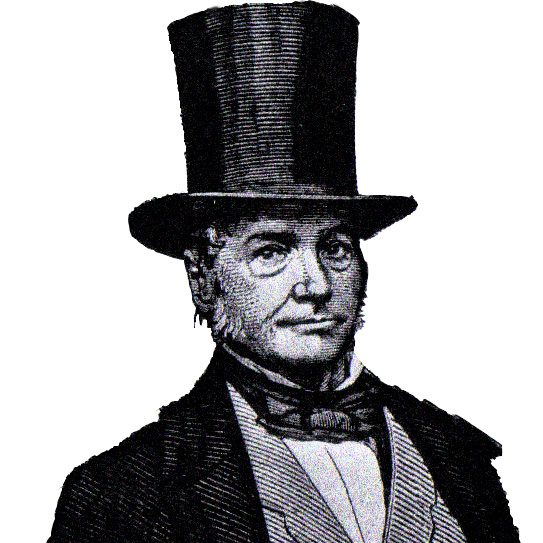

One of the not least strange circumstances in my life is, that I seldom ever had any great desire to get hold of a worthy character without having it gratified. How that most adroit of all thieves, Adam M‘Donald, did flutter my laurels! If ever there was a man who interfered with my night’s rest, it was that man. For twenty- five years he had laid contributions on the good folks of Edinburgh; and yet, such was his caution, dexterity, and boldness, that he escaped trouble. Often apprehended, he was so successful in non-recognitions, alibis, and scapegoats, that he foiled every one. As my reputation increased, so increased my regret at his. At one time he was the aim and object of all my ambition. Yea, I would have given all my fame, to have it to earn again by the capture of that one man. We knew each other perfectly well, often met, and looked at each other, saying, as plainly as looks could do, “ I know you love me, M’Levy, but I am coy, and will never submit to your embraces ”—“ Why will you not eat, Adam? the apple is sweet; and, if it should be the price of your soul, I will be a gentle master over you.” It wouldn’t do. If I was a gentleman in charge, he was a gentleman at large. If I was curious in my changes of place, Adam was everywhere, and yet nowhere. If I was up to a thing, Adam was up to twenty things. If I was burning to catch Adam, as only one article, Adam was zealous to catch many articles without being caught himself. If I was vexed with disappointment, Adam was comfortable in success. Never was an Adam more envied than he was by me, and never an Adam more difficult to tempt.
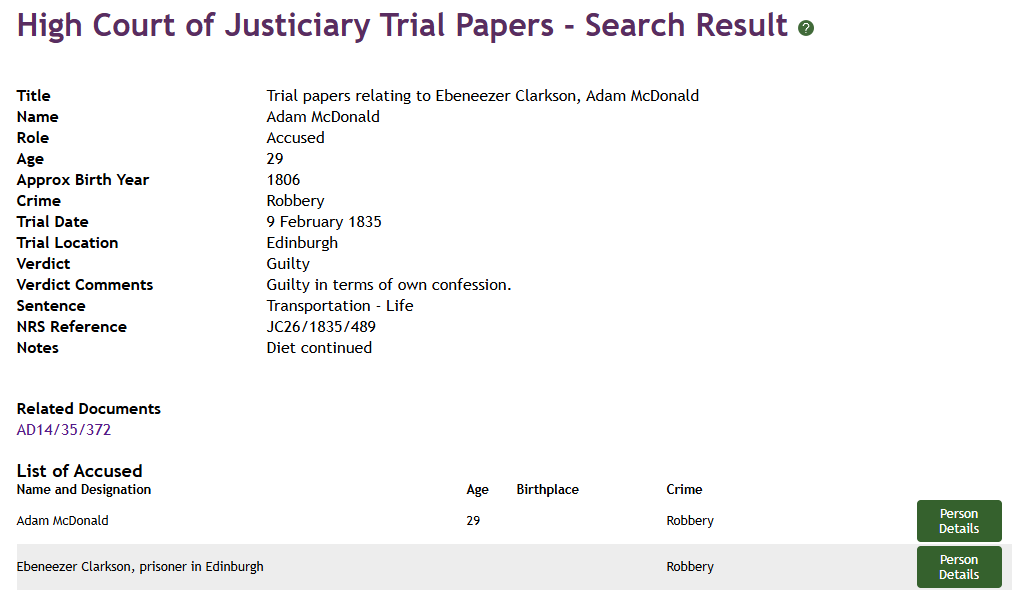
It is said, that if you “ wait long enough to become tenant of a house, you may sleep in the king’s palace.” I would have waited a hundred years to get possession of this man; but, probably, my good angel, Chance, thought I had waited long enough when the period came to fifteen years. Yet that was not the whole time of his triumphs, for that had extended to twenty- five—yea, he had been great when I was little, famous when I was unknown. And surely these fifteen years were enough. I certainly thought so, and some other detectives among the gods must have been of the same opinion; for in January 1835 it was reported to us that a gentleman had, on the previous evening, been robbed in the High Street of a gold watch, and it was suspected that the famous Adam was the skilful artist. To whom should this great business have been committed by Serjeant-major Ramage1 but to me, his natural rival in fame? Yes, that commission was the very pride of my life; and I set about its execution as if it had been a power of attorney to possess myself of a thousand a-year. Yet the very boon was at first like a mockery. The suspicion against him was a mere gossamer web of floating surmises. No one would swear to him, and he was so defiant that I could not apprehend him without evidence to support my interference with the liberty of a British-born subject. I was pestered with advices,—a kind of contribution I never valued much, for, though they cost nothing to give, they are often dear to receive. One of the weaknesses of the regular celebrities is a kind of pride of a clever achievement, which (however unlikely it may appear to ordinary thinkers) leads them, as if by a fatality, to the scene of their triumph—ay, to the very repetition of the same act in the same place. Admitted that it is a weakness, I have often found it my strength. It will scarcely be believed, that at a quarter to seven of that evening when I got my commission, I was posted in the entry to Milne Square, in the almost certain expectation of Adam figuring again thereabout, and in the same way. There I stood, while Mulholland went with some message to Princes Street; and, before he returned, whom did I see pass, going east, but my friend Kerr, road officer at Jock’s Lodge—groggy, but not unable to take some care of himself? I knew he had a gold watch, which he guarded by a chain round his neck. No sooner had he passed, than I saw Adam, and a faithful friend, Ebenezer Chisholm, following and watching the unsteady prey from the middle of the High Street. My heart would have leapt, if I had not something else to do with its ordinary pulses,—and I could have wished even these to be calmer.
I do not say that it was a rather rebellious state of my case that made me in an instant old as ninety, and lame as palsy. With what difficulty and straining of nature I made across the street, eyeing all the while the victim and his followers. I saw them leave the middle of the street and betake themselves to the pavement, about the door of M’Intosh’s snuff-shop, where they laid hold of Kerr, no doubt, as friends, each taking an arm of him, to help him on, and save him from robbers. At sight of this I got young again, my palsy left me, and I planted myself under the pend of Blackfriars Wynd. May Heaven forgive me for my adjuration, that that man, Adam M’Donald, should at that moment be put into my hands. Surely I might be forgiven the prayer when the prayer would be answered, but then it would not be till they took him to the King’s Park, on his way home, where they could do their business undisturbed. Would they be fools enough to attempt a robbery of a road-officer, on the principal street of the city? Answer—I have already stated my ridiculed calculation. I saw them leave the pavement at a point opposite to the very pend below which I stood. In an instant, the feet were taken from Kerr, he was thrown flat on his back, with a sound of his head against the granite which reached my ears. Chisholm held him down; Adam, whirling the gold chain over the victim’s head, rolled it up in his hand, along with the watch, and bolted,—Chisholm, at the same instant, making for the dense parts of the Canongate. But whither did Adam bolt? Into my very arms! Yes; I received him joyfully as a long lost friend. But that ingratitude, of which I have complained so often! The moment I clutched him, he commenced a struggle with me, which, if I had not been of the strength I am, would have ended in his escape. Excepting once, I never encountered so tough a job. The moment we closed in the strife, I could see his face marked with the traits of a demon, while a sputtering of words, mixed with foam, assaulted me otherwise than in the ear—“ M‘Levy, the devil of all devils! ” responded to, without the foam, “ Adam M’Donald, my love of all loves ! ” Nor did my grip, nor even my blandishments, calm him. He swung himself from side to side in sudden writhings, breathed more laboriously, flared upon me more luminously with his flaming eyes, which I could see in the dark; and yet he could not get away. I answered every movement by an action equal and contrary, and, as the crowd increased, his determination at length began to be loss resolute. Yes, I had nearly conquered this hero of twenty-five years’ triumphs, when Mulholland, having returned from Princes Street, and seeing a crowd down the High Street, made up, and laid his helping hand on my antagonist. “ Adam M’Donald,” said I. “ Adam McDonald ! ” echoed he, in wonder. “ Long looked-for, come at last,” rejoined I. “ Yes, you have caught a man,” said Adam, with a bitter sneer; “ but nothing else. I defy you. I have done nothing that’s wrong, and have no man’s property.” “ Here is the watch,” said a man of the name of M‘Gregor, who kept a tavern at the head of the wynd ; “ I was standing at my door when the robber came rushing in, and the moment you closed I heard the clink of something at my foot. On taking it up, I found it to be this watch. I give it to you, Mr M‘Levy.” “ I know nothing of it,” cried Adam; “ you cannot prove it was ever in my possession.” “ I saw you throw down Mr Kerr on the street,” cried a woman, looking into M’Donald’s face. “ It’s a lie,” cried the infuriated demon. “ He’s lying there yet, man,” persisted the woman. And it was true, for Kerr had been so stunned by the fall, added to his state of drunkenness, that he lay where he fell, and the rush to the wynd so confused the people that some short time elapsed before he was looked after. Just as we emerged from the wynd with our prisoner, they were assisting Kerr up. We left him in good hands, and proceeded with our prisoner to the office. I never was very fond of crowds to witness my captures, but in this case I thought I could understand a little of that feeling delighted in by mighty conquerors, crowned poets, and such celebrities in their way. We have all at times our portion of pride, and who knows, when I don’t deny, but that when now taking Adam M’Donald to my stronghold I felt myself to be as great a man as any of them 3 for when had a conqueror watched fifteen years for his enemy? When had a poet taken as long to write his poem? The only difference between us was, that, while these think they are working for immortality, I did not just come to the conclusion that the capture of Adam M‘Donald by M‘Levy would be celebrated by anniversaries or jubilees. Not that I did not think that future ages, thus neglectful, would be ungrateful, if not foolish, but that I did not want to dwell upon it.
But there we are with our prisoner before Captain Stewart, after this something like ovation, as they call it, but of the meaning whereof I am doubtful; not so of my captain’s reception of one who had been so long as a lion in his way; for no sooner did he cast his eyes on Adam than he exclaimed— “ Here at last! but, M’Levy,” he whispered, “ you have committed a grave error.” “ Not at all.” “We have no evidence that it was he who robbed the gentleman last night.” “ No more we have; but he has robbed another to-night, and, see, there’s the evidence—no other than the watch of Mr Kerr, the road-officer.” “ And where was the deed done?” “ Where, amidst all laughter, I said it would be—in the High Street.” “ Most wonderful! ” I don’t think so. They tell us that truth is very simple, and that lies are very knotty. I have yet a way of getting at the road where men are likely to travel, and there I meet them. I told you that robbers and thieves have a yearning for the places where their pride has been flattered, and so you see it is. Even Adam, the cunningest fox that ever went back to the same roost, with his ears along his neck, his eyes like fire, and his mouth all a-watering for the second hen, couldn’t go against the common nature anyhow. But we have Chisholm to get—his old henchman, a foxy-headed fellow too, who held Kerr down while Adam swept the chain over his head. I must complete my work. But, here, as I went down the High Street again with Mulholland, I saw our difficulty in so far as Chisholm was concerned, for I doubted whether anyone saw him in the fray. He had learned of Adam, and knew of alibis, and scapegoats, and all the rest of the resources of men who put themselves in a position where they must be greater vagabonds still. So it was. We found he had gone into a publican’s house in Carnegie Street, where he had collected a number of sympathisers, who were ready to swear that he was there drinking at six o’clock, —as so he might have been,—and thereafter, till long past the hour of the robbery, so that it was impossible he could have been engaged in it. Yet I was not daunted; we went to his house, and found him in bed by the side of his wife (?), who, the moment she knew our message, insisted that he had never been out of the house since six o’clock. “ That’s true,” he rejoined. “ An alibi everywhere,” said I. “ Your wife swears to your having been here ; the man in the public-house in Carnegie Street, and half-a-dozen others, say you were there ; and I saw you, with my blear eyes, in the High Street robbing Kerr at eight. You were thus in three places at one time !” And my man was actually inclined to abuse my religion, because I would not admit he was a god. I confess this roused me a little, and being, besides, impatient of his delay, I seized him perhaps more harshly than I am in the habit of treating my prodigals to get them out of the troughs of the swine, and give them bread and water in place of husks. Yet he was disobedient and struggled; then began one of those scenes which in my trade are unavoidable, and very disagreeable to a quiet man like me, who, if I had occupied the place of Simpson, would have done as he did with his children, —clapped them with the one hand, as kindly grooms do restive fillies, and put the kench over the head with the other. The wife clung to him and screamed; her fine black hair—and she was a regular beauty all over—falling over her back and shoulders, quite in the Jane Shore2 way, and looking, as it lay upon her white skin—where shall I get anything like it ?—but what would be the use if I should try it, when I am satisfied you could detect nothing to come up to it anywhere, except in Mohammed’s showroom of temptation? Then her arms were fixed round his neck, and I could see one or two rings, which should have been in my keeping, shining on fingers that were just as fine as any lady’s; and why not ? for she was “ a fancy,” and wrought none; and so she held on, crying and weeping, as the tears rolled down on a face so pure in its colour, and so delicately tipt off in the curved nose, with the nostrils wide from excitement, and the thin lips open too, and shewing equally fine teeth, that my heart began to give way, though not a melter. Somehow or other, he liked the grip of this lava-Venus better than mine, and no great wonder, I suspect; and as she clung to him, and he to her, I could not separate them anyhow, until Mulholland, getting to the back of the bed, drew her to him, while I pulled him out.
“ Hold her on,” said I. A request which my assistant—very modest man as he was—did not disobey, but he had no easy task, for the creature, who had got hysterical, writhed in his large hands like a beautiful serpent; till, at last exhausted, she sank in his arms, with her face turned up to him, and her beseeching eyes so fixed on his, that he afterwards declared, that if it had been possible to save Chisholm, he would at that moment have given two weeks’ pay (40s.) to send him back to so faithful a creature. But I had something else to mind. “ Get on your breeches, sir.” But my prisoner was slow indeed; never before, I believe, did a man dress so slowly, with the exception, of course, of those who dress for the last home, under the impression that the clothes are to go, without a testament, to him who finishes all toilets with the hempen cravat. Yet there was excuse for him, which one might have found in his eyes, fixed as they were on the girl, as she lay still, as if dead, in the arms of Mulholland, and, it may be, not to be seen by him again, whose first step out would be in the direction of Norfolk Island. 3
I might notice all this, and have some qualms about my heart as I thought how strange it is that vice makes “no gobs” at good looks, but gets into very beautiful temples. Even Chisholm was himself a good specimen of the higher sort of the higher animals, and really the two should not have been what they were, nor where they were. But no help; away he must trudge. Mulholland laid the poor girl gently on the bed, and left her alone, but with little of that glory she might have been encompassed with in another quarter, if more fortunately fated. McDonald was easily disposed of at the trial before the High Court, but it was a tough job with Chisholm, who, with his witnesses from Carnegie Street, battled for his alibi in noble style. No use; they got a lifetime of the other hemisphere.

- Sergeant H. Ramage of the Royal Scots Greys was a recipient of the Victoria Cross for his bravery at the Battle of Balaclava during the Crimean War on October 25, 1854. He was recognised for saving a private, taking a prisoner, and carrying a wounded man to safety under fire. ↩︎
- Jane Shore – mistress of Edward IV ↩︎
- Norfolk Island – penal colony in Australia until 1855 ↩︎
 James McLevy