
This large building, so christened by Scottish humour, —a little grim in its profanity,—still presents its dark front to Leith Wynd, on the same line with the Happy Land. At the time of which I speak, it was occupied chiefly by great masses of profligate women, some in rags, some in silks, mixed up in grotesque confusion. However well I know all its dark apartments and holes, it is beyond my power to describe it in such a way as to be followed with satisfaction by my readers. The middle stair led, and leads still, to a number of flats—each of these divided into dwellings, some of only one room, and some of two or three, and the size generally indicating the proportion of inmates, for they were literally crammed with human beings. They were almost all appropriated to the same purpose,—prostitution, with its accompaniment, intoxication. Among them were what might be called establishments, got up in a very simple way, and with no more capital than served to purchase a few old beds, chairs, and fir tables. One worn-out unfortunate, who chanced to outlive the limited term without becoming a cinder-wife, would contrive to get these articles, often through the medium of some man ‘with a few pounds to spare, and who would have a share in the earnings, and thus “ set up.” Presently the rooms, seldom exceeding three, were filled with the young castaways with which Edinburgh was filled, and who were always on the outlook for shelter, taking along with them their stock-in-trade, often enough only the flimsy rags on their bodies. Sometimes there was no mistress, the affair being a joint partnership among three or four of these young women—clubbing for the few articles of furniture, and each earning her own livelihood, and spending what she earned in her own way—the usual routine being bread and butter, eggs, tea, and whisky. Neither of these kinds of places of business, where the proprietor or partners lived and got drunk on the premises, was without the indispensable bully, or “ fancy man ” —that very worst example of degraded human nature,— always a thief outside, and a sorner1 on poor female wretches within—acting at one time the cruel hawk, preying upon small game, and at another the “dirty Andrew,” living on the droppings of gulls as they fly over him. On entering these places, I have found him lounging among the women, and, as if ashamed, slinking away into some dark hole, scowling and looking back with his swollen eyes. He knows his degradation well enough, but the shame is changed into revenge against every one who can yet hold up his head, a man among men; and, strange enough, he and his kind are the wretches upon whom these women, often pretty young creatures, throw away their affections,—or rather, I would say, from my experience, that there is scarcely an unfortunate to be found anywhere, even in the genteel palaces of sin, where they are seldom let out, who does not have her low secret “fancy,” all the while the gay youths who go about her think they are the objects of her affections. Wherever, in short, these creatures are, there are the indispensable carrion crows. Not that they keep these hangers-on always for robbery, for often enough I have found concerted cases among two or three or four women, all leagued for the systematic plunder of the simpletons who are enchanted into their dens. On the second flat of the Holy Land, I
had occasion to be acquainted with a nest of female conspirators of this kind, who executed their business without the assistance of a bully. Their names were Jean Mullins, Elizabeth Thomson, and Eliza Graham ; and their plan owed its principal feature to the condition that they should so work their treble-bagged net that when the fish was secure they should be all in at the hauling. But how was this to be managed? It required some cleverness both of mind and body. Their rooms looked to the street, and when one took in her “cully2” she made a signal by hanging a white cloth out at the window so that the other two might come in and assist. If one could act best alone, the two others might retire to the other room; but when it was necessary to dose the victim with drink, it was advantageous that they should all three be at the work. That they had force, and adroitness to use it in self-defence, is evident enough; for they knew that there are men who, under the rage of being so deceived and robbed, can be very dangerous; but they laid their account with taking advantage of their united strength in attack, when, perhaps, the individual, though intoxicated, was wary and resistive.
No one who saw these girls could have doubted their formidableness, not from their strength alone, for they were only lithe and active. Their extreme youth was a recommendation to those who were likely to fall in with their wishes; and the good looks of at least two of them —Thomson and Graham—might promise well for the filling of the net. One night in December 1847,—a very cold one, with snow on the ground,—Mullins got into her toils a gentleman of the name of H____ll, from Manchester; and the good soul sighed ardently for his translation to the Holy Land, not that she hinted she had any intention of taking him to a place the name of which would, to a Scotchman, have given rise to suspicions, and even to an Englishman might have suggested some contrast. No, she wanted him only to her lodging, which was all her own, not a “ house ” where a bully might murder a cully, but a quiet kind of retreat, with nobody near but a good old woman, so discreet as to wink at ways of pleasantness which she herself had enjoyed. Mr H—11 was tempted, and went along with the siren.
And to that holy of holies she led him. Thomson and Graham, the moment they heard her coming in, retired to the farther room, leaving a fine glowing fire to welcome the stranger. How kind in the good old lady to have that fire in that cold night, to thaw their cold limbs, and be
so propitious to love ! After remaining for some time, Jean was satisfied that Mr H—11 would not drink. He was a temperate man, and resisted all liquors which tended to steal away the reason, and therefore she must act upon her own hook. That she did pretty effectually, if we might judge from his starting up in a terrible consternation and bawling out—
“You wretch, you have taken from me a £50 Bank of England note.”
“You’re a liar,” cried Mullins; “you have lost it somewhere else.”
“ I deny it,” rejoined the temperate gentleman. “ I made sure by feeling for it at the foot of the stair before I came up to this door.”
“ Then you must have lost it on the stair,” said she.
“We were passed by two women, one of whom you pulled by the gown.” “Yes, but I could swear it wasn’t she,” he cried again.
“ And what care I for your oath? See, here’s a witness,” she cried, as Eliza Graham opened the door, coming out of the inner room. “ Eliza,” asked Mullins, “ did you come up the outer stair a little ago, and go into your room by the lobby? ”
“ Yes,” was the confident answer. “ And wasn’t you at the foot of the stair when we
came in? ”
“ Yes,” with equal confidence.
“And didn’t you see that thief, Bess Collins, who lives above us, come down the stair after we went up ?”
“Yes,” repeated the vixen, “and what’s a great deal more, she told me she had got a haul of a £50 note out of Mullins’ cully.”’ And so tickled was Jean with the sharpness of Graham, that she burst out into a derisive laugh, in which not only Eliza joined, but also Elizabeth, who had also rushed in to help the game. The man stood thunderstruck, nor was he for a time able to speak. “ Come, then,” said Mullins, thinking he was satisfied, “give me a dram for ill-using me, and we’ll make up.”
“Yes,” said Eliza, “and I’ll help you to catch Collins. Won’t I be such a stunning witness against the thief! ”
“Yes, and serve her right,” broke in Elizabeth; “for it’s she and the like of her who brings all us decent girls into bad character.”But H—11 was sharp enough—and the form of the house might have led an observant man to it: he rushed to get into the inner room to see what he suspected, that there was no opening from it to the lobby whereby Eliza Graham could have got in. But no sooner did he make the effort than the whole three laid hold of him.
“What to do there? ” asked Elizabeth. “ It is my private room; and why would you wish to go into the sleeping-place of a respectable female? ” “ Not like a gentleman,” said Eliza.
“ Not a Scotchman, at least,” said Mullins. And so they really shamed him out of his purpose; but Mr H—11 was not yet done. He bethought himself of the police, and ran back to the window of the room where he was, with the intention of pulling up the sash and bawling out.
“If you do, you villain, we’ll tumble you out*to send you after Collins,” cried Mullins. And H—11 got terrified at the young furies, who stood pulling and dragging him, with wild looks and flaming eyes, as if they would have torn him to pieces. If H—11 had been a powerful man, he would at least have ended the personal struggle, but though not strong, he had still the small amount of courage necessary to enable him to make a stand against three young and even slender females; so he began to lay about him in the hope of terrifying them, but they had been called upon before for a device to pacify an unruly victim.
“If you arn’t quiet,” said Mullins, “I have only to give three knocks on the door, and one will appear who will pacify you, so that you ’ll require no more peace in this world.” “A bully?” cried H—11. “ Perhaps,” answered Jean; “ and must not poor unprotected girls be defended against liars who say we rob when we don’t ?” Mr H—11 had scarcely courage to meet a man of that stamp, and then he had no doubt that such a scoundrel was not far off. He was, in short, nearly at his wit’s end, and became quiet through a kind of despair.
“Just better walk out living, than be carried out dead,” said Mullins. “And go after Collins,” added Elizabeth with a laugh. What could the poor Englishman do amidst so much adroitness, boldness, and threatened cruelty? They had entirely mastered him, and there seemed only one chance for him. He was quite satisfied as to the manner of the transference of his note, and he knew the Edinburgh police was under good management; so he had presence of mind enough to appear to give in to the Collins theory. He would now repay them in their own
Scotch money. “ And where will I find this woman Collins said he. “ Oh, everybody knows Collins,” said Mullins, scarcely able now to restrain her satisfaction at getting quit of the police, their greatest terror; “she walks Princes’ Street, from the Register Office to the foot of Hanover Street.” “And how is she dressed?” asked he again, but only as a device. “Bonnet and green ribbons.” “ And what like is she ?”
“ Ugly—turned-up nose, mouth like a post-office, and
eyes like a cat.” Whereat the two laughed heartily.
“You can’t miss her,” said Mullins, again. “And if you’re good, I’ll tell you a secret,” added Eliza Graham. “ I will be good and quiet,” said poor H—11, so wise behind the hand. “ She has the £50 note in her muff; just go up to her, snatch the muff, and bolt to your inn, and you ’ll find it.” “Very well,” said H—11, taking his hat, and running out; hearing, as he went— “ And you won’t give us a dram for what we have told you ? scurvy beggar ! ”
No sooner had he got downstairs, than he hastened to the Police-office, where he reported the robbery of £50, by Jean Mullins, and gave the description of the three women and the house. I took charge of the business, as being familiar with the Holy Land, as well as every one, mostly, of its inmates. After a conversation, in which Mr H—11, still excited, wished to enlarge on all these particulars, and which I saw the necessity of cutting short, I went and apprehended the girls, searched the house without success, and found only some silver on their persons. No more could be done that night. The note had been conveyed to a resetter, and tracing is always a delicate affair. In this instance, I was not without my idea. There was a person of the name of Thomas Brown, who kept an old metal shop on the ground storey of the Happy Land, and I had strong reasons for believing that he acted as resetter to the thieves of the various flats. About ten next morning I was on the alert, but as the article I was in search of was so small and delicate an affair that it might have been put into a walnut, I saw I could have no chance of getting it if my shadow were cast in at that man’s door. I knew, moreover, he would change it at a bank, and it was even profitable to give him time to get that effected. At ten, I ascertained —though not by calling—that he had gone out, and immediately set off to try if I could bring him within the verge of my eye. By going to the banks, any advantage thereby derived would be counterbalanced by my chance of falling in with Brown. I had a weary hunt that day. I could find him nowhere, and was about to give up that scent for my fortune at the various banks, when, at length, crossing the top of Leith Walk, I saw my metal merchant, accompanied by another person, coming direct- up from Leith. A thought now struck me that, as it was not then uncommon for thieves to get their English notes changed at Leith, Brown and the other man had been down at the Bank of Scotland branch there, getting their object effected. I resolved, therefore, on letting Brown in the meantime go un-noticed, and take my chance of my “ idea.” I hurried, accordingly, to Leith, and found, upon inquiry, that the note had been changed at the bank there only a few minutes before, I regretted that the number of the note was unknown to Mr H—11, and therefore to me, but I got such a description of Brown’s friend that I had no doubt of the man. I got the note from the agent on receipt, and hurried to Edinburgh.
I went and apprehended Brown, and afterwards got hold of his friend, whose name is not in my book. Never was a man more delighted than Mr H—11 when he learnt the fate of the note; but the business was not yet finished. There could be no doubt of the travels of the small bit of paper, or the hands through which it had gone; but there was a difficulty. The bank-agent could identify Brown’s friend; but, he being unwilling, who was to identify a note with a number not condescended on, because not known? Then, unless we could identify it as stolen, the bank would reclaim it. Nay, we could not get at either the robbers or resetters. Nor would it have been any better though I had got the fifty Scotch notes on Brown or in his house, because, whatever the presumption might have been, the legal proof that they were the change of this £50 note would have been wanting.
I had only one remedy.- I went to Brown’s friend.“ Now,” said I, “ you’re in for Botany Bay.”
“ You must prove me guilty,” said he, doggedly, for
no doubt he had a share in the spoil
“ Why,” replied I, “ it is an easy matter that. The bank-agent at Leith will swear to you as having changed the note at his office.” “ Well, and what then ? ” not much moved as yet. “ What then ? It will be demanded of you where you got the note.” “No man is bound to tell where he gets his money,” he replied, doggedly. No, certainly, if he does not feel the force.”
“ What do you mean ? ” said he. “ Simply this,” replied I, “ that as every honest man is ready to admit where his money comes from, your refusal will be taken as a confession, and you will be held responsible for the robbery.” “ Are you sure of that ? ” “ Sure; and what a fool you are! Suppose you got it from Brown, and say so, you are free. You are a mile off from the women, and no one will blame you for being made a dupe of Brown, but rather pity you. Besides, you are doing your duty to your country.” This last speech did the job—the man broke down. “ Well,” he said, “ I did get the note from Brown to change, and I changed it, getting a pound to myself.”
“ And you ’ll swear this?” “ Yes,” replied he, stoutly. “ All right,” said I. “ You will be liberated after the trial, with no scath.” So this strange case terminated. All the three denizens of the Holy Land, along with the dealer in hard goods, were tried before the High Court. One of the girls—I think Eliza Graham—was let off, on what special grounds I don’t remember. Mullins and Thomson as the robbers, and Brown as resetter, were all sentenced to seven years. I have always considered this case as one of the narrowest that ever went through my hands. It had a good effect. The Holy Land did not become more holy, —that was impossible,—but it became, for a time at least, more circumspect. A great many of the “ Virgins of Jerusalem3,” in their white robes of innocence, were at the trial, and they would take home to the Holy Land the fate of their sisters
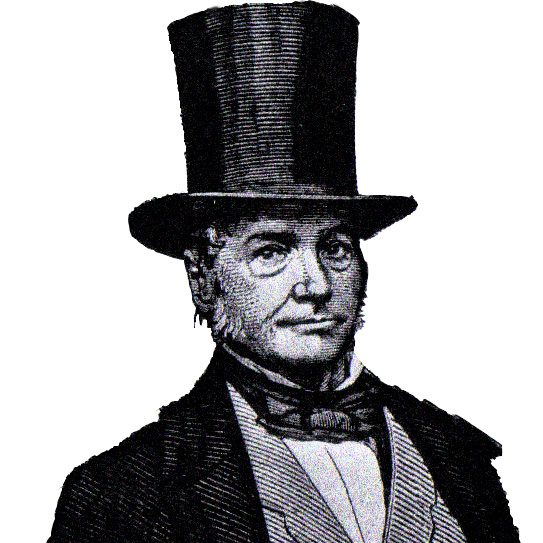
 James McLevy