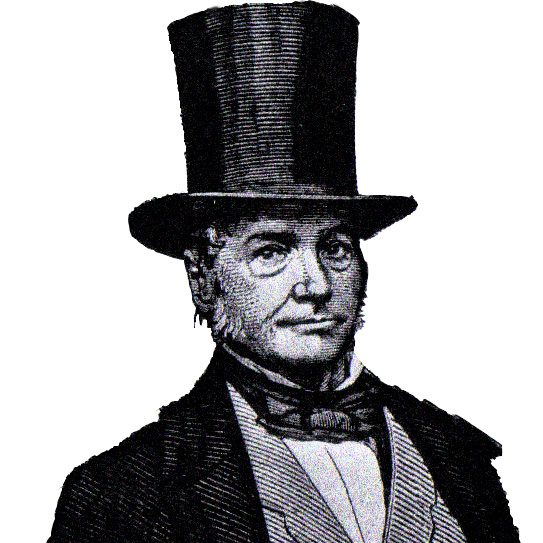

One night in 1832,I was at the station in Adam Street, at that time a very disreputable part of the town—it is better now—in consequence of the many bad houses and whisky-shops in the vicinity. There were often rows there, chiefly occasioned by the students, many of whom lodged in the neighbouring streets, so that when our men were called upon it was generally to quell a quarrel, or carry off some poor degraded wretch of a woman for some drunken violence or pocket-picking. On the occasion to which I now allude the call upon us was different. The time was late,—past twelve,—and the streets were being resigned to the street-walkers and collegians. All of a sudden a shrill scream of a woman’s voice reached my ear, and, running out, I heard a cry that a man of the name of M‘—ie, who lived in Adam Street, had been robbed, or attempted to be robbed, on his own stair. Then there was a shout, and a pointing by two or three people,—“ They are down to the Pleasance.” On such an occasion it has always been my habit not to take up any time by questions for an account of external appearances, because the answers are tedious, and there is more to be gained by time in a rush in the proper direction, trusting to what I may call “criminal indica- tions,’* than by ascertaining what kind of a coat or hat a man wore, or the length of his nose, or height of body, and so forth. So I noted the index, and took to my toe-points as fast as I could run, down in the direction indicated, but as lightly as I could, for fear of my tread being carried in the silence of the night on to the ears of the runaways. I may mention, too, that I stopped several sympathisers, who were inclined to join, but who, I knew, would only scare, and do no good. I had the pursuit, if such it may be termed, all to myself, but was immediately “called up” by one of those rock-ahead incidents which are so tantalising to our class,—no other than two roads, each holding out its recommendations to me, the one that the robbers would certainly take to the deep haunts of the Old Town, where the fox-burrows are so inviting and the difficulty of un- earthing not easily surmounted; and the other, that they would seek the outskirts, and so get down to the valley between the Pleasance and Arthur Seat, where they might skulk in the deep darkness of the night, and so escape. A minute or two would turn the scale, and I must decide even almost as I ran. I have often quivered in this dilemma, and seldom been wrong in my choice; yet I can’t account for one out of ten of these instantaneous decisions. I really believe I have often been swayed by some very trivial incident, perhaps the shuffle of a foot, perhaps a gust of wind not heard as such, but simply as something working upon the ear. The barking of a dog has resolved me, the shutting of a door, or even a greater silence in one direction than another,—nay, to be very plain, and perhaps weak, I have sometimes thought I was led by a superior hand,
so directly have I been taken to my quarry. It was so now. It was just as likely the fellows would go north to the Old Town, or south to the Gibbet-Toll1,—no gibbet now to scare them. I turned to the left, down the Pleasance; even as I ran, and about halfway between my turn and Mr Eitchie’s brewery, I met one of our men on his beat, coming south, pacing as quietly as if no
robbery could have been suspected in his well-watched quarter.
“ Met two fellows in a skulk or a run ?”
“No, one; but before I crossed the foot of Drummond Street, I thought I heard the sound of quick feet, but it stopped in an instant, and I then thought I might have been mistaken.”
“ Then stand you there as steady as a post, but not as deaf. Keep your feet steady, and your ears open.”
I had got just a sniff, and it is not often I have needed more. They had, no doubt, gone that way, and, on observing the officer, had got into a burrow. I stood for an instant,—no common-stairs here, no closes, no cul-de-sac, no hole even for the shrinking body ofa robber. The first glance brought me near my wit’s end, but not altogether. I have always been led on by small glimpses of Hope’s lamp till I got nearer and nearer her temple, and never yet gave up till all was dark. I stepped to the other side of the street, where there are some bad houses. No door open, every window shut, and no light within that could be observed. I could walk with the lightest of feet, and proceeded noiselessly along the narrow pavement till I came to Drummond Street, where there is the recess in which the well stands. I had no hope from that recess, because it is comparatively open, and, dark as the night was, they could scarcely have skulked there without the man on the beat seeing them. Yet I was satisfied also that they could not have gone up by Drummond Street. I may mention that I could hear when almost every other person could discover nothing but silence; nay, this quickness of the hearing sense has often been a pain to me, for the tirl of a mouse has often put me off my rest when I stood in great need of it. I require to say nothing of my other poor senses here; they were not needed, for there was nothing to be seen except below the straggling lamps, in the pale light of one of which I saw my man standing sentry, but nothing more. Expecting nothing from the recess, I crossed to the angle, rather disappointed, and was rather meditative than listening, foiled than hopeful, when my ear was arrested by one or two deep breathings,—scared robbers
are great breathers, especially after a tussle with a victim. I could almost tell the kind of play of lungs; it speaks fear, for there is an attempt to repress the sound, and yet nature here cannot be overcome. On the instant I felt sure of my prey, yet I tested my evidence even deliberately. There was more than one play of lungs at work,—I could trace two,—and all their efforts, for they had seen the man pass, and had probably heard our conversation, were not able to overcome the proof that was rushing out of their noses, (as if this organ could give out evidence as well as take it in,) not their mouths,—fear shuts the latter, if wonder should open it,—to reach my ear, just as if some great power adopted this mode of shewing man that there is a speak- ing silence that betrays the breakers of God’s laws. Now certain, I hastened over to the man on the beat, and, whispering to him to go to the station for another man, took my watch again. I knew I had them in my power, because if they took themselves, to flight, I could beat them at that trick; so I cooled myself down to patience, and kept my place without moving an inch, quite contented so long as I heard the still half-suppressed respirations. In a few minutes my men were up, coming rather roughly for such fine work. I took each by the coat-neck,—“ Steady, and not a whisper! They are round the comer,—batons ready, and a rush.”
By a combined movement, we all wheeled round the angle, and before another breath could force itself, we had the two chevaliers in our hands,—even as they were standing, bolt-upright against the gable of the house that forms one side of the recess. Like all the rest of their craft they were quite innocent, only their oaths— for they were a pair of desperate thimblers, whom I knew, at once—might have been sufficient to have modified the effects of their protestations. They were, indeed, dangerous men. They had nearly throttled M‘—ie, and in revenge for getting nothing off him had threatened to murder him. My next object was to get them identified by the people who had raised the cry, for if they had dispersed we might have been—with nothing on them belonging to the man—in want of evidence, though not in want of a justification, of our capture of two well- known personages. Fortunately, when we got to the station some of the women were there who identified them on the instant, whereupon they became, as sometimes the very worst of them do, “gentle lambs,” and
were led very quietly to their destination in the High Street. Remitted to the Sheriff, their doom was fourteen years.
“And the breath of their nostrils shall find them out2.”
- “Gibbet Toll” refers to a toll-bar located on the Dalkeith Road in Edinburgh, near the area where a gibbet (a structure used for public executions) was once erected. The gibbet itself, and later the toll-bar, gave the area and its nearby street the name “Gibbet Loan” ↩︎
- Quote from the bible – Issiah 2:22 ↩︎
 James McLevy