My reminiscences, I find, contain so many of those turns which are called coincidences, that it may be asked, why so, when such occurrences in ordinary lives are so very few and far between ? Yet it is to be remembered, that I was always on the trail of crime, and that when these startling incidents occurred, I was at the place, and among the persons, where some such discoveries might transpire. In short, as I have said, if Chance so often favoured me, I was as often poking at her. , In that close or pend leading to Tweeddale Court, so famous as the scene of Begbie’s murder, by Coulson or Moffat, a robbery took place in July 1848. It seems that a small manufacturer of Galashiels had come into town with some bales of rather valuable goods,—tweeds, shawls, &c.,—and that during his sojourn here, he had taken up his residence in a flat led to by a door on the right-hand side of the pend. While the man had been out, probably disposing of some of his goods, some persons had entered the house with false checklock keys, and made a clean sweep of his bales. One person could not have done the deed, because the weight was at least equal to the strength of two stout men or full-grown youths. We got notice instantly, and I set out on the adventure of trying to recover the poor man’s stock-in- trade.
The greater part of stolen things find their way generally to the bad houses, for it is among these the male thieves—and here I suspected that sex—almost always lurk, with this advantage that they can get the women to help in the disposal of them. In this instance, the probability of the housebreakers being among these haunts was, to my mind, increased by considering the nature of the articles stolen, particularly shawls. I accordingly commenced a search among the brothels,- expecting chiefly to find some pair of shoulders adorned with so envied an article as a fine new plaid, in justifi- cation of which expectation—the short time taken into account—I may just state, what is well enough known, that the desire to put on new fancy articles overcomes all prudence, and defies the danger of the mere recentness of the theft. Yet my calculations in this instance failed, though I believe I visited twenty of the most probable dens in the Old Town, neither finding the said adorned shoulders, nor the bales from which the adornments might be taken. Discomfiture generally, I may admit, or rather boast, nettled me, and I was on this occasion very loath to give up, however harassing my labours. I wandered and wandered everywhere, as curious an observer of plaids as a Galashiels weaver or Paisley manufacturer. This may be said to have been very vain, for I did not know the patterns; and then hasn’t almost every woman a shawl? Yery true, but then I knew so many of the likely ones, as well as their tawdry dresses, that I might have found it somewhat fortunate if I had met such as Jane or Kate Smith, or Lucky Maitland, swaggering away under the pride of a Galashiels plaid, span new, and all her own too. But I did not meet these celebrated personages in any such condition, so tempting to culleys. Completely worn out, and as yet without hope, but still stiff enough in my determination, I was dragging my legs up Blackfriars’ Wynd, intending to give a look in upon the paradises there, to cheer me in my terrestrial troubles. Perhaps I would have continued my searches into that hopeful sphere, Halkerston’s Wynd, where Lucky Maitland and her nymphs spent their happy days; for when I began these hunts I was, like the red-coated hunters,—who can never tell when they are to be home to dinner, because Reynard does not condescend to tell them where he will be caught,—entirely uncertain when I should give up. A sniff might inspire me, and blow my soul up into a flame, at the very moment I was among the cinders of, I won’t say despair,—for I don’t know what it is,—but of considerable pulverisation. Indeed, I couldn’t tell the humour I was in, but it was not a good one; just in that state when a little whisper would revive me and bring me up again. I believe I was so far gone that I had my hands behind my back, not the best sign of a detective on duty, when a little urchin of a girl—with just as much upon her as would entitle one to say she was an improvement upon Eve after the catas- trophe of the apple—peered up into my face, and with a leer, which might either have been fun or devilry, cried—“ Man, do you want a shawl for your wife 1” “ Shawl, eh ! ay,” said L
“ Because thae twa women there,” pointing to Jane and Kate Smith, whom I had the honour of knowing, “ hae bonny anes to selL”
“Ho there, lasses !” I cried on the instant, and going slap up to them in an intercepting way; “ I want to buy a shawl from you.” “We have nae shawls,” said Kate. “ Wish we had,” said Jane. “ Then what bundles are these you have under your arms’}” “ Nae business of yours,” said the one, and then the other. “ If it is no business of mine to buy a shawl, having no wife, neither is it yours to sell. Come, let me see them.” The women knew me, and probably thought there was little use in battling the watch with me. At least I got easily from them their respective bundles, which I undid upon the spot, and found, to my great surprise, a fine Galashiels plaid in each. “ You would not sell them,” said I, “ and now I will take them for nothing; and what’s more, I will pay no price for you; so come along with me to the Police-office, to answer for the manner in which you got this stolen property.” After some of the ordinary cursing, they went along with me, and I took them to the office, where they were retained. I was aware I could get nothing out of them, and therefore lost no time in going away to Halkerston’s Wynd, where I knew they lived, with a famous mother of harpies,—no other than the said Lucky Maitland. On entering the den, I met the old mother at my first approach, stationed with the determination to keep me out,—the best reception I could have got. She was growling like a she-bear whose cubs are in danger.
“Ye hae nae business here,”—the old address I have heard so often,—“ there’s naebody here but decent folk —awa’ wi’ ye ! ”
“ It’s not indecent folk I want, Mrs Maitland,” said
I; “it’s dishonest folk; and if you have none of these about you, you need not be afraid.” “ Ou ay, the auld gibes. Man, can ye no just say, ‘ I’ll be d d but I will be in ? ’ Faith, I would like the ane better than the other.”
“ But I came here to please myself, mother,” said I, “ not you;” and so I pushed her to a side, and went for- ward, followed by the hag, muttering her sworn wrath. On getting further in, I found sitting, or rather lying, in a dark small room, two “ halflins,” as we call them, -—neither men nor boys,—whom I knew to be Glasgow thieves—James Wilson and John Morison. They were living there among half-a-dozen probably of young women, among whom, though so young, they could keep their places, if not command them, by the charm of money got by thievery. I may mention that people are often under the mistake of estimating such youths by the common standard, not being aware that they have lived twice their years, and have more cunning, trickery, boldness, and “ worldly wisdom ” of their kind, than probably their fathers. The women were all out, but what is the day to these owls ? When night comes, they revive like torpid snakes, and revel in all the sins of Gomorrah, amidst ribald songs, oaths, dancings, jolly bouts, and prostitution. I would stop the next night’s revelries anyhow. Without saying a word, I called in my assistant to take care of the young tigers, as well as the old tigress, while I should search for the Galashiels bales. Search! why there they were, piled up between two truckle beds, almost entire, if the plaids carried by the Smiths were not all that had been taken out of them. “ Whence came these ? ” I said to old mother. “ They ’re a hawker’s, wha left them here this morn- ing; and a d d ill-pleased man he’ll be when he kens they’ve been stowen frae him by riff-raff o’ police.” “ Step Up to the office,” whispered I into the ear of the constable, “ and bring down two men to carry up the bales, and I ’ll remain here in the meantime.”
“ An’ ye ’ll be blaming the twa puir callants,” she con- tinued, “ wha are as innocent as the baby born yesterday.”
“I never said they were guilty, Mrs Maitland,” said L
“ Na, na ! ye canna say that, God he thanked; I ken their parents,—decent, honest folk, as mine were, an a’
my kith. And wha says no ? I wad like to see him, and maybe thae nieves an’ his nose would be as sib as lovers’ mou’s.”
I sat down on a crazy easy-chair, and allowed her to
go on; for I knew the woman, and that to try to stop her was to excite her.
“An’ wha turned your nose this way? Was there
nae scents in Blackfriars’ Wynd, or ony ither wynd, that
ye cam’ here, whaur the deil a thief or liming is ever
seen frae January to December? But touch thae laddies if ye daur. They’re brither’s sons o’ mine.” “ The name of the one is Morison and the other Wilson,” said I, more for amusement than anything else. “ It’s a lee, sir; but the police are a’ leears, every mother’s son o’ them. Were I a man, and a’ men were like me, we would rise upon ye and hang ye like Porteous; but no on a barber’s pole—it’s owre guid for ye,” and then she laughed hideously. Nor would she have stopped for an hour, if my assistant, who had met two constables at the close-head, had not come in, and put an end to her oration. I proceeded to put the bales on the men’s backs, amidst the terrible cursings of the hag; and having despatched them, my assistant took one of the youths by the arm, and I the other.
“ Good day, Mrs Maitland,” said I. “ And an ill day to you, ye scoondrels,” she yelped, as she followed us. “ But a waur’s waiting ye, when ye ’ll roast in hell-fire, for banishing and hanging honest men’s bairns, when it’s yoursel’s should be in the rape; but indeed a rape’s owre gude for sae cut-throat ruffians.” The remainder—if remainder it could have been called, which would have gone on till next morning—was cut short by the shutting of the door as we left her, but not without being honoured by a scream of vengeance, which made all the old tenement ring. Even when up near the top of the close, we heard her, as she had sallied out, yelling at the top of her husky voice, and calling down upon our heads all kinds of punishment. But luckily there are two sides to a question. If Mother Maitland cursed us, the Galashiels manufacturer saw the case in another light, and showered upon us his blessings, and probably he would even have gone the length of reversing the deserts, by hanging the good mother at her own door. Nor did I forget her either, for when I brought away the thieves, I merely left the resetter for a little, till her rage cooled.’ In a short time,
I sent for her to join the four already in custody, as fine a company as ever met together to enjoy the pleasure of a pannel-box. On examining the bales, I believe they had just been taken in time,—a day would certainly have reduced both their bulk and their value ; as it was, they were entire with the exception of the two plaids. And I believe further, if the manufacturer had been able to find out the funny urchin, she would have been clad, very much to her wonderment, from top to toe, in real genuine tweed; but if goodness in this case went unrewarded, not so evil, for the whole four were duly punished. The Smiths got twelve months, Wilson eighteen months, Morison fifteen months, and the good Dame Maitland, six months. This case suggests a remark. The judges, when they pronounce such sentences, no doubt think they are inflicting punishment, and philanthropic people will even pity the victims. Yet I have often doubted if our prison punishments are really punishments to them. The thraldom, no doubt, keeps them from the objects of their wishes; but their lives, in spite of their assumed jollity and wild mirth, are really in such opposition to human nature, that they never can be called happy : so that if their punishment is an evil, it is only one evil in place of another; and so we find them treating their sentences with a levity which is just a symptom of a kind of despair influenced by drink and debauchery.

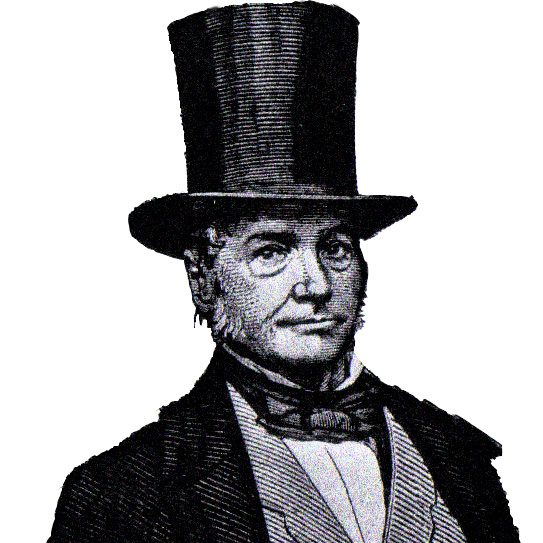
 James McLevy