I have often thought of the different kinds of outlaw characters which have fallen in my way. If you take the general term “ thief,” then you can arrange them into sneakers, fighters,’ bolters, and pleaders. I need not go into a description, where the traits are so evident; but if I were asked to say which of the kinds is the most troublesome, I would fix upon the first. You can overcome a fighter, watch a bolter at the window, replead a pleader, but a sneak, gifted with cunning, who lies, crawls, lurks, winds, and doubles, requires all your wits. To match them all demands many powers both of body and mind, but, beyond all, courage, both moral and physical; and it is not to be wondered at, nor attri- buted to me as self-praise, if I say that in my experience I have not found many men who combine the gifts. One man has one, another another, and they are useful each in his department, where the character of the criminal is known. That, however, cannot be ascertained till the gentleman has been tested, and the whole tribe flit about so much that they become new in the various towns.
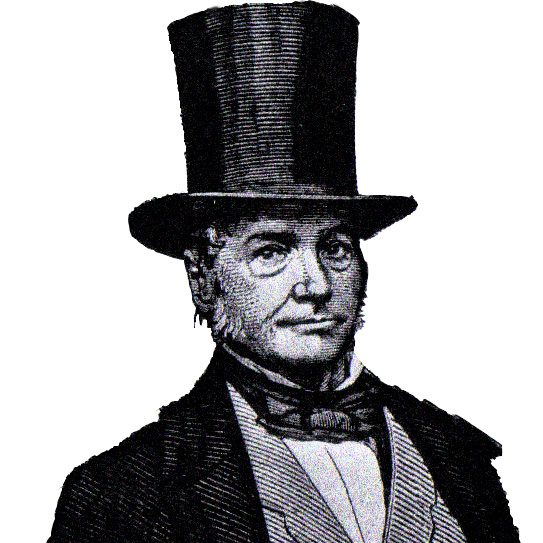
David Howie, originally belonging to North Leith, was famous about 1836, chiefly for his escapes by holting; not that he escaped always, for we had him several times through hands, but that he had as yet been successful beyond our wishes, and had a great objection to the other side-of the water. We repeatedly were within arm’s-length of him, but his recklessness in leaps from, windows, his speed, and confidence in these qualities, enabled him to baulk us oftener than any man I have known. Still he stuck to Edinburgh j a strange fata- lity that in thieves and housebreakers,—their remaining in a town where they not only know that they are known to the officers, but where they have been again and again convicted. However this may be explained,— and I won’t attempt it,—it is clear enough that as the knowledge of them increases, they become gradually defiant. They become settled in a trade which they think (and, as our society is formed, they are not far wrong) it is absolutely necessary, they should follow; the necessity being, of course, a consequence of their own acts; which necessity again renders it necessary that society should have nothing to do with them. Howie, unlike many of them, tried other places,—that is, “ went to the grouse,”—and we thought we were quit of him; but intelligence reached us from Stirling, in the same year, 1836, that he had cleared out a watchmaker’s shop there, got the stolen property sent to London, and escaped the fingers of the officers by leaping from a high window, in his old Edinburgh style. A considerable period elapsed. It was known afterwards that he went to London, and got the large quantity of watches and jewelry disposed of. Knowing, as I did, that he must now have been what they call “ flush,” I expected him to his old haunts. I had experience as well as theory to justify this expectation. A “ flush” thief has the same yearning to get back to his native place that a rich In- dian has, after he is sure he can overtop his old school-fellows. Nor are they without an object; often a great desire to figure among the girls, whose affections are competed for, and earned just as the gentleman has it in his power to gratify them with money. Perhaps, were I permitted to look out of my profession a little, I might say they are not unlike their neighbours in this respect, though I would not take it upon me to say that every man has a side-look to the sex in his efforts to make cash to gratify them when wives. At least, in Beau Howie’s case, I was just as sure that he would have a “ fancy ” with him, or get one here on his return, as I was satisfied he would turn up in the old dens. Nor was I wrong. “The Bolter” was in due time seen, dressed in the first fashion, so that he would not have shamed “ plush ” at the club-house in Princes Street if he had gone to ask whether His Grace or My Lord was in town; but our David was, in one respect, even more sensible than another of that name,— in so much, at least, as he did not demean himself so as to earn the ridicule of his “ fancy.” Nowhere, indeed, can we see the wonderful effect of dress and money working with more effect than in the attraction a “ swell ” exercises over the lower class of unfortunate females. He is a very god among them; but David had made his choice of a help-meet and a worshipper in a woman—Ann M’Laren—whom we all knew as “ The Hooker,” from her art in transferring,—a dark gipsy-looking wench, with eyes that could see to the bottom of a pocket a foot deep, and fingers that could search it for other things than a psalm-book; and withal, so far as genius and a pretty face went, quite worthy of so clever a fellow as “ The Bolter,” and so accomplished a gentleman. The moment I heard he had taken up with this woman, I considered him secure, for women make a dangerous “ trail ” to men of this stamp,—not that they betray willingly, which they seldom do, but their acti- vity, and gossiping about their “ fancies,” and the endless ramifications of their small ways, soon get to our ears.
I had only to trace the female to find the male bird; but soon found that she was, as they call it in their slang, alive or awake. One day, I got my eye upon her in the High Street. She had no time for doubling that day, and was bolder, or perhaps off her guard, for no creature can be for ever a watcher,—the mind must have a rest; perhaps, too, she was hungry. At any rate, I traced her to a stair in the Grassmarket; but I must wait long enough to be certain it was not merely a house of call. Indeed, from my knowledge of the stair, —and what stair was I not compelled to know ?—I was pretty well made up to the conclusion that there she and David passed their sweet lives of innocence and ease.
By inquiries, I was able to fix upon the room they occupied. There were several windows connected with the lodging, and these required to be looked to. It was a part of the many wonders told of “ The Bolter,” that, knowing his genius for leaping, he took his lodging accordingly ; not on the ground-floor, because he might expect an ordinary watch at the window,—nor very high, for then he might break his neck,—but something between, not beyond his hope of getting to the ground, but greatly beyond the notion of a policeman that he would attempt it. I must have him at any chance for the Stirling affair, and required not to be scrupulous. Otherwise I must give up, and wait for a new charge. A little refining on the danger of his not being identified by the Stirling witnesses,—and, after all, he was only suspected,—or of not finding any of the watches,—which I could hardly expect,—would have ruined my enterprise. “ The Bolter” was too important a personage to let slip, from my fears of myself being liable to the charge of taking up a man innocent, at least, of any unpunished crime.
I selected the hour of midnight, the most auspicious for many reasons,—though, no doubt, often cruel, for while a man is most easily taken in bed, so it is propor- tionally hard to drag him from the twining, soft arms of love to the encircling grip of unkindly iron; but, then, what right had he to call me and my men from our homes and beds to look after him? I had several officers prepared for an encounter. There were all the windows to guard, because he might leave one room and fly to another. To make sure work, I posted a man at every window, ready to receive David in his bolt, reserving for myself the high privilege of paying my respects to him personally. All was ready,—a dark and still night, no light at the back of the lodging where the men stood concealed, and scarcely a sound anywhere, except the echo of some tread of a late passenger going along the Grassmarket.
I ascended the stair with no more noise in my step than a velvet footed cat would make in nearing a rat-hole. Got to the landing-place,—listened at the door,—no noise. Gone to bed, thinks I, happy in each other’s bosoms. Hard fate of mine, to be obliged to part such hearts! but then a comfort it was to part those whom God had not joined,—and then, peradventure, join them again in a honeymoon trip over the sea. It was no fault of mine that their lives had not been lovely. Knocked very gently,—no answer. Again,—no answer, but a whispering. “ It is, Davie,” I heard Ann say; “ get up.” Anon came a rumbling noise, the meaning of which I understood,—they were barricading the door. Then with my knowledge of the man, it was for me now to be obstreperous, yea, as noisy as I could.
In a battue you profit by making as great a kick-up as possible, to get the animals in the safe place. I would either catch him or drive him out of the window into the kindly embrace of my nurses outside. These crazy doors are no impediments; I placed my back to the pannels, my foot to the opposite side of the narrow passage, and drove it in with, a crash, for the table and chairs behind flew off, adding their confused noise to that of the splintered door. At that instant the window drew up, and all I could see of “ The Bolter” was the tail of his shirt as he disappeared from a height of fifteen or twenty feet. Thinking I had not seen the flight, Ann ran to the window,’drew it down, and met me, prepared; and I, knowing he was safe, was as much at my ease. “ Where is Howie gone?” said I.
“You are on the wrong scent,” said she; “he doesn’t live here.”
“ And whose clothes are these ? ”
“ These ? why, they belong to my husband, who has gone out. If you will wait”—(no doubt to give David time to get off)—“ I will tell you all about it. My man’s name is ”
“ I am not curious, Ann,” said I, “ about your husband ; I only want to search the house. This I accordingly did, smiling as I saw “ The Hooker ” so keen to hook time by even helping me in my search where she knew nothing was to be found. Yes, there was absolutely nothing. The watchmaker’s stock had melted away into the usual fluidity in London,—a result a little alarming to me, if I had been by nature capable of being alarmed, which I am not; for though “ The Bolter ” was sufficiently habit and repute to justify his being at that moment snug in my nurses’ arms, I had yet no charge against him, except the old suspicion of the Stirling affair,—a suspicion merely,—and I stood exposed to the risk of being defeated by a verdict of “ not guilty,”— always, in such cases as this, as disagreeable to me as agreeable to the panel. The longer Ann could get me to wait the more light- hearted she got,—waxing merry as the hope rose upon her that she had “ done me ” by detaining me from a pursuit of her master, lover, and copartner. I was in no hurry to undeceive her, and, moreover, I had no available charge against her. I knew her subtlety too well to try to get anything out of her. So quietly bidding her good-night, and hoping her husband would soon be in to comfort her for my intrusion, and the smashed door and broken tables and chairs, all of which she passed over without a charge for breakage, I left her. On reaching the foot of the close, I found the shirted David in the embrace of his tender nurses, having been caught in the arms of one of them just as he threw himself from the window. We proceeded to deposit him in his crib, sending back afterwards for his clothes.
Next morning I had a conference with the Captain. Information was sent off to Stirling, but he feared we would be defeated, in consequence of nothing being found in the house. I was a little uneasy, and was meditating as to whether I could make sure work by getting some other charge against him. And now occurred one of those extraordinary coincidences which have made my life a romance to myself. I happened to be standing in such a position down-stairs—thinking N of what I was to do—as rendered it quite possible for me to hear a prisoner speaking to any one outside in the close; and just at that moment I thought I heard the very low and cautious sounds of two persons conversing. I could gather scarcely anything, but I was satisfied a woman outside was talking to one within the bars. I have already alluded to my sense of hearing, from which I have derived so much advantage. Yet withal I could catch but little. I detected the words,
“ Run and make away with the boots,” spoken in a kind of loud hissing whisper. Next instant I saw Ann standing in the close. Losing no time, I proceeded to the Grassmarket; got into the room easily enough, for the broken door was not yet mended; got hold of the boots; and met Ann at the close-foot, as she was hurrying, with flushed face, and the keen light of anxiety glancing from her gipsy yes, to execute the commission. “I have got them,” said I; “and will save you the trouble of carrying them up to your husband, who did not return to you last night.” If the glance which followed had been steel—and it had all the light of steel—I would have detected no more in this world. On getting to the office, and searching the books, I
ascertained that a pair of boots had the day before been taken from the house of Mr Craig, in Church Lane, leading to Stockbridge. To Mr Craig I went. They were the very boots; and that gentleman described to me how they were taken. They happened to be standing on a table opposite the window, and were abstracted by some one who quietly drew up the sash, and deliberately let it down again. With my information thus obtained, I looked in upon Howie.
“ I have brought the boots, David, which you asked Ann to go down to the Grassmarket for. What purpose do you intend to turn them to here ? ”
“ What I ” he cried, “ has the b—tch betrayed me, after having spent all my money upon her ? ”
“No,” replied Ij “I knew you were anxious about them, and got before her.”
“How, in the devil’s name, could you know unless you had got her over ? ”
“That’s my business.”
“ You ’re the old man,” he said coolly enough, for he had no notion that I could discover their owner;
“ always in compact with the devil, but you ’ll not hang me yet.”
“ I don’t want. But were did you get these boots 1 *
“ Try to find out,” he growled. “ They ’re paid for
anyway; no one could stop me at the shop door.'” “ Window, David, lad.”
He knew he was caught, and became as dumb as the boots themselves,—satisfied, I believe, that I was in compact with the devil.
He was thereafter taken to Stirling, that the fiscal might try to connect him with the clearing out of the watchmaker’s shop. Meanwhile,—so soon do these “fancies” forget their loves,—Ann got another partner ; and here, though not much inclined to notice matters out of my own peculiar line, I cannot help re- marking how strangely these outlawed beings carry their ties of love and friendship. They are like the knots of ribbons bn women’s persons,—very nicely bound themselves, but binding nothing else; and, taken off at night, are pinned on next morning to some other dress. Habit enables them, both men and women, to mix old griefs—for they have griefs—with new joys, and these they have, of a crade kind, too. However true the “ fancy” is to her swell, she always contemplates the probable shortness of her obligation, and is quite ready for a new bond when some very ungallant Sheriff or Justiciary Lord severs the existing one. I have known cases where one of these Arab-like creatures has sat in the court and sobbed at the fate of her darling mate, and when he was sentenced to death or banishment, hopping away with a new swell from the court, pass perhaps a month or two with him, then to sob for Ms fate; and so on. There is something affecting about many of them, which would melt very stony hearts. Often interesting, kindly creatures, with bosoms that would have been fountains of love and kindness to husbands and children, if they had been better starred, —and they had no voice in the casting of the form of their fates,—they throw away their devotedness on heartless scoundrels, who make tools of them, and mistresses of them, only to leave them on an instant’s notice. But then the very changes reconcile them to a fate they can’t escape; and thus there is nothing but unhearty laughter and very hearty tears—love’s griefs and love’s tears again, love’s mirth and love’s groans for ever. But it does not last long, thanks to the fate that is so cruel to them. A few years is the average of their lives. You would be astonished were I to tell you how they have passed from my watchful eye. Three, or four, or five years, and a new set are on my city beat. They come and go like comets, blazing for a time with wild passions, and then away to make room for others. As for the real artistes, one has less sympathy. In place of being kept by men, they keep them—often prostituting themselves for them, robbing for them, suffering for them in a thousand ways, ay, even by imprisonment, and often cast away by the heartless scoundrels to die, or, what is worse, to rot without dying. In the case of our Ann, I traced her for a year or two, and then heard she had died of disease and want. She, no doubt, had had a foreboding of the fate of “ The Bolter,” nor was it false. He was sent to Stirling as I have said. The fiscal could not identify him as the robber, and he was sent back to us. The charge for the boots remained. It was urged against him as an old offender, and there being no doubt of his guilt, he got seven years. His fate hung upon a whisper; for if I had not overheard the direction to Ann, to .make away with the article, I would not have thought of tracing their origin any more than that of the rest of his fashionable clothes—all of which we would have thought he had bought and paid for out of the proceeds of the watches and jewelry, very soon spent, as all the money of such persons is, let it be what it may. Nay, they can’t keep it. It bums their hands till it is cast away, and then the hands itch again for the touch.
I believe Howie never knew that the breath of a whisper sent him “over the seas and far awa’.”

 James McLevy