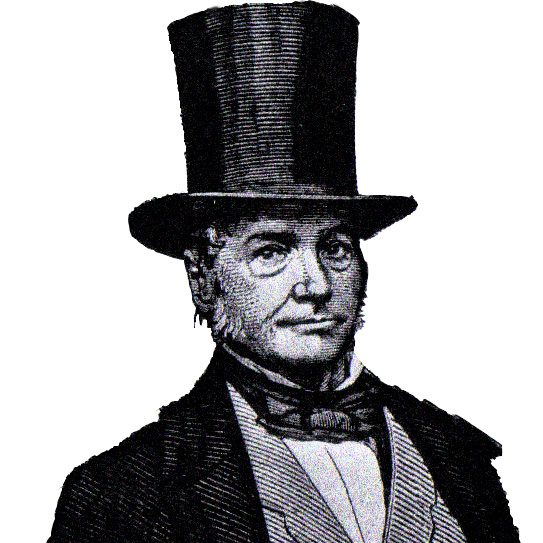
FREDERICK HALLARD. By Thomas M’Kie, Advocate.
Frederick Hallard, Advocate, senior Sheriff-Substitute of Mid-Lothian, died in this city on 12th January 1882, aged sixty-one.
His father was a soldier in the French army, who, after the Revolution of 1793, emigrated to this country, and, along with other Royalist refugees, took up his abode in Edinburgh as a teacher of his native language. Here he married, lived, and died. His son Frederick was born in this city in May 1821. At the age of four, he was taken to Avranches, his paternal home in Normandy; and there, and at Paris, he received a sound and liberal education. At sixteen he returned to Edinburgh. The strong affection he always had for the city of his birth arose not more from admiration of its material beauty, than out of regard for its intellectual renown, and the friendly intercourse which existed between it and France in the olden time. Being destined for the Scotch bar, young Hallard attended the usual classes at the University of Edinburgh, and proved himself a diligent and distinguished student. He was admitted to the bar in 1844, joined the Speculative Society, and after acting for some years as a reporter on the Jurist, he was, in 1855, appointed by the late Sheriff Gordon junior Sheriff-Substitute for Mid-Lothian.
From that time until his death, he discharged the duties of his office with a manly independence of spirit and judicial integrity of purpose, rarely equalled. The year before his judicial appointment, he married Mary Carr Robertson, a daughter of the late Mr. James Robertson of this city. The marriage was one of affection, and for many years was a source of uninterrupted happiness. But of the nine children born of the marriage, death carried off three in as many months; shortly afterwards, the grave was again opened to receive his beloved wife, and in 1873 he had yet again to follow to the tomb his eldest son, Frederick, a youth of great brightness and promise. Against this overwhelming affliction, Mr. Hallard bore up outwardly with manly fortitude; but those who knew him best knew too well how the sad ruin of his once happy home haunted his memory, and bowed to the earth a spirit shrinkingly sensitive and keenly affectionate. It was then that he truly felt the consolations of philosophy; for he had loved letters from his early youth with a devotion which grew with his growth, strengthened with his manhood, and continued with him to the end. His literary tastes had adorned and brightened his life in the times of prosperity, and when the sorrowful days came, these tastes weaned him from him- self, and gave him comfort, if not consolation. One charm of his society was, that along with a love for all things lovely and of good report, he united in a singular manner, in his own person, two separate nationalities. For his intimate acquaintance with French literature, history, politics, and jurisprudence was happily combined with a wide knowledge of, and a lively interest in, everything pertaining to the literature and jurisprudence of our own country. To his other accomplishments, he added a keen relish for classical studies, and particularly Greek.
Besides doing his judicial duties, Mr. Hallard for many years, and until his death, acted as a Director of the Philosophical Institution, and took an active part in the management of its affairs. The useful work he did there cannot be better summarised than in the words of its Vice-President, Dr. William Smith, who at a meeting of the Directors of that Institution thus spoke of Mr. Hallard :—” We can call to mind how much his fine tastes, his varied culture, and his active helpfulness, his ready aid, always willing and gracefully rendered, have contributed to our success. Associated with him as I have been for nearly thirty years, no one knows better than I do how much we have been indebted to him in these respects; and I had looked forward to the time when you might permit me to retire from this chair, which by your favour and indulgence I have occupied so long, and called on him to fill it with new and fresh efficiency.”
Mr. Hallard became a Fellow of the Royal Society on twenty-first January 1867. He was proud of its diploma, pretty constant in his attendance at its meetings, but never read a paper, nor took part in the debates. This was partly owing to an inherent modesty of nature, and partly because his knowledge and the bent of his mind were much more literary and philosophical than scientific.
He published several able pamphlets on legal topics, one of them being entitled ” The Inferior Judge,” and he took a prominent interest in all questions affecting a reform of the law. Apart from these he did not write much; yet what he did write showed such vivacity, grace, and culture, that, like the aroma of good wine, it served but to whet the appetite and to make one wish he had written more. But that was not to be; and so he has passed away from among us, still to be held in fond remembrance by a wide circle of friends.
Proceedings of the Royal Society of Edinburgh , Volume 14 ,https://doi.org/10.1017/S037016460000448X Published online by Cambridge University Press
References
 James McLevy