
Before Calton Jail, Edinburgh used the Old Tolbooth (next to St Giles’ Cathedral) and the Canongate Tolbooth as prisons. These were considered outdated and overcrowded by the early 19th century. Reformers sought to create a more modern, secure, and humane facility.
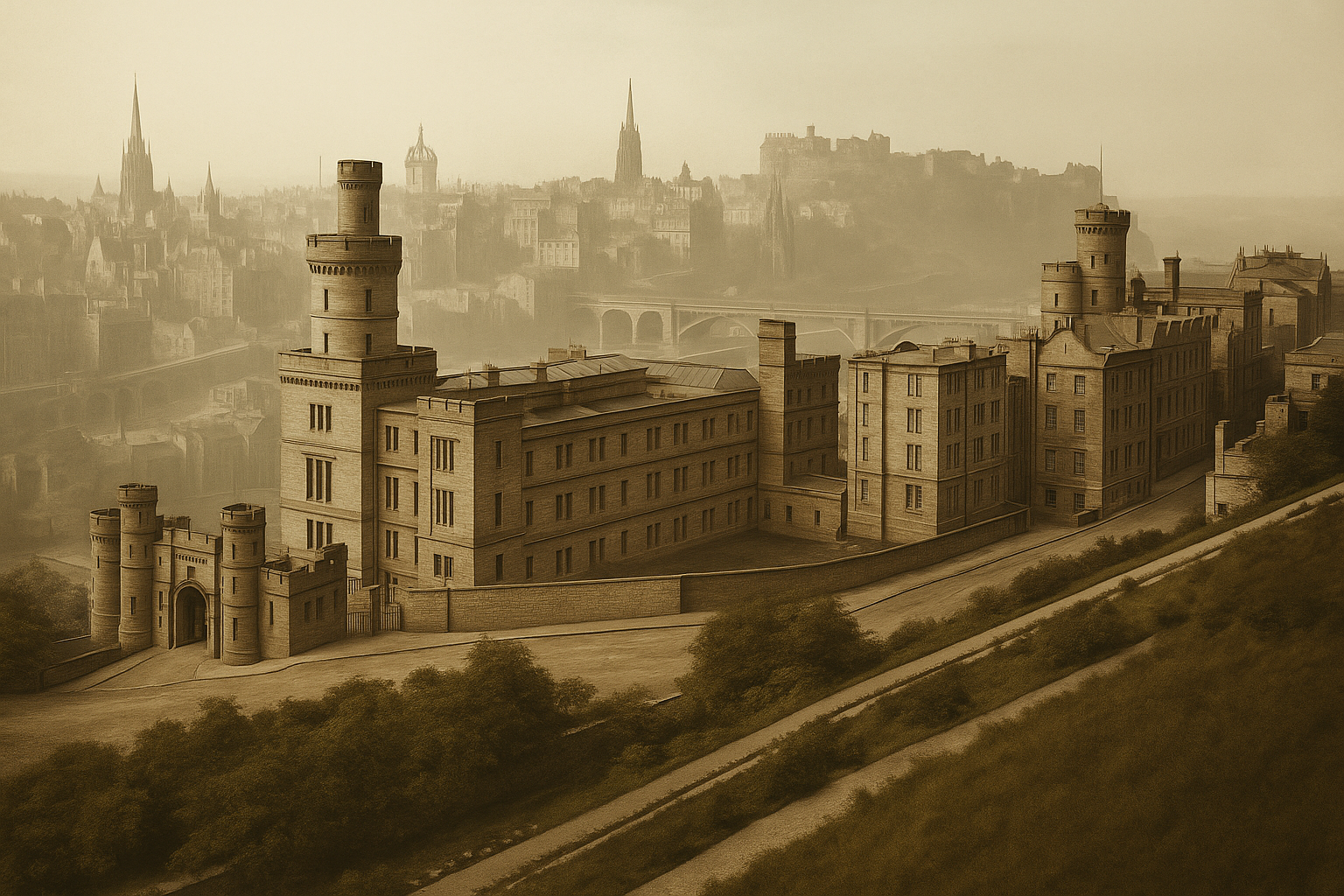
Calton Jail was designed in the Scottish Baronial style, with imposing towers and turrets that made it look more like a castle or fortress than a prison. It was often called “Scotland’s Bastille” due to its foreboding appearance.
Calton Jail became Edinburgh’s main jail, housing all types of prisoners—from debtors and petty criminals to murderers and political prisoners. It was also the site of public executions until these were moved behind prison walls.
Though intended as a reformist structure, over time the prison became notorious for overcrowding and poor conditions. It was a grim place, despite early intentions for improved incarceration practices.
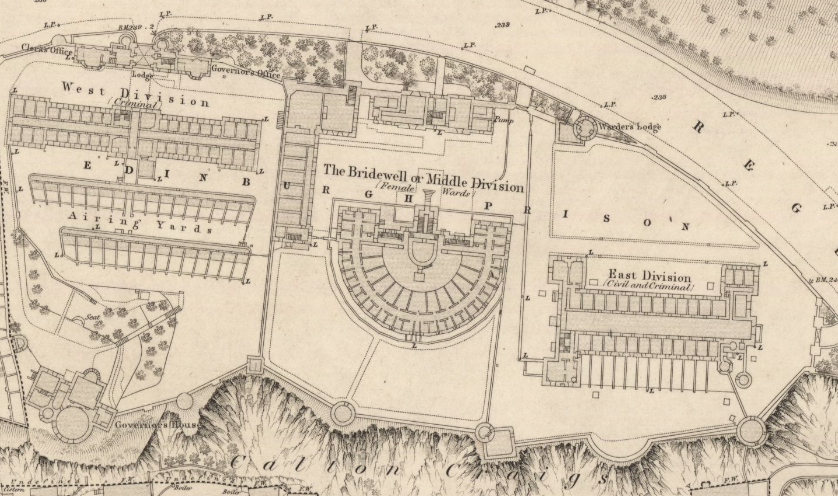
Bridewell Prison (1795): Designed by Robert Adam, this semi-circular structure allowed guards to observe all prisoners from a central point, embodying Enlightenment ideals of surveillance and reform. This became the women’s prison.
Calton Jail (1817): Architect Archibald Elliot expanded the facility, creating a fortress-like appearance with turrets and battlements. The design was so imposing that visitors often mistook it for Edinburgh Castle

Features
The Death Cell: A windowless cell where condemned prisoners awaited execution. A door from this cell is now displayed at The Beehive Inn in the Grassmarket .
Executions: Calton Jail was the site of many executions, including that of Jessie King, the last woman hanged in Edinburgh in 1889 for child murder.
Burials: It’s believed that some executed prisoners were buried on-site, with their remains still beneath the current government car park
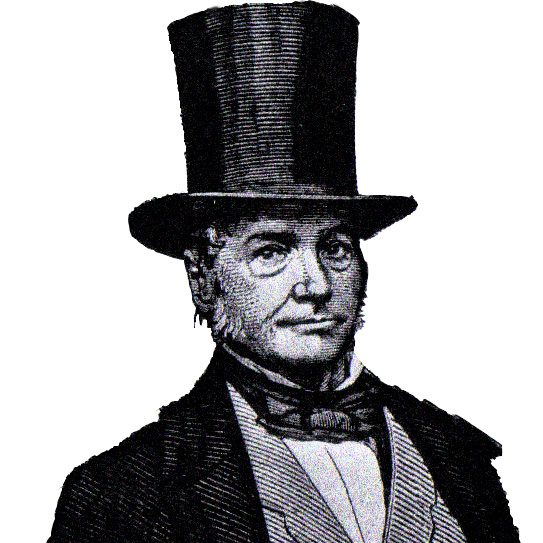
 James McLevy