
The 1830s marked a period of subtle but significant transformation for Edinburgh. While the Industrial Revolution was in full swing across Britain, the city navigated its path between tradition and modernity. The decade saw the first signs of urban strain, growing social divisions, and cultural flourishing that would define the city’s Victorian future.
Timeline of Key Events – Edinburgh in the 1830s
| Year | Event | Significance |
|---|---|---|
| 1830 | Growth of New Town continues | Expansion of middle-class housing and civic space |
| 1831 | Edinburgh population hits 138,000 | Urban overcrowding intensifies |
| 1832 | Cholera outbreak | Sparks early concern over sanitation |
| 1832 | First Reform Act | Expands political participation for some |
| 1833 | Burgh Reform Act | Modernizes city governance |
| 1832 | Death of Sir Walter Scott | Marks the end of a literary era |
| Late 1830s | Early railway planning begins | Prepares Edinburgh for the rail age |
A Divided City: Old Town and New Town
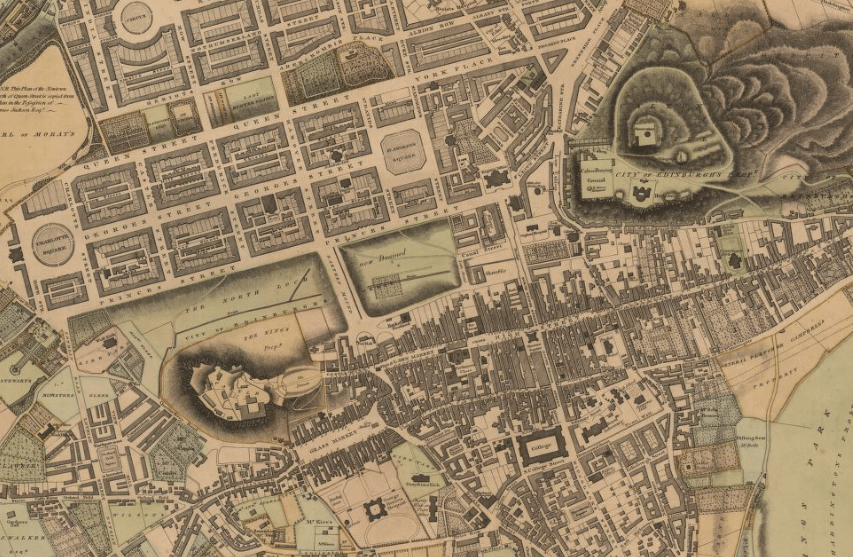
Edinburgh in the 1830s was becoming a city of contrasts. The New Town, developed from the late 1700s, continued to expand with elegant Georgian terraces and broad streets, offering a refined lifestyle for the middle and upper classes. Meanwhile, the Old Town—a medieval warren of narrow closes and towering tenements—was slipping into overcrowding and decay.
As wealthier residents moved north to the New Town, the Old Town became densely populated with artisans, labourers, and the urban poor. Buildings were subdivided, and unsanitary conditions became a growing concern.
Population Growth and Migration
Edinburgh’s population surged in the early 19th century. The 1831 census recorded around 138,000 residents, a dramatic increase from just a few decades earlier. Much of this growth came from rural migrants and Highlanders seeking work in the city. The result was both economic dynamism and pressure on housing, services, and public health.
The Cholera Epidemic (1832)
In 1832, Edinburgh faced a major public health crisis with the arrival of cholera, part of a wider European pandemic. The outbreak claimed hundreds of lives and exposed the dire sanitary conditions in parts of the city, particularly in the Old Town. The crisis prompted new discussions around urban health, water supply, and drainage—issues that would come to define mid-19th century reform.
Infrastructure and Technology
- Gas Lighting was increasingly introduced in the 1830s, lighting streets and improving public safety after dark.
- Transport: While the major railway boom came in the following decades, planning and preliminary works for lines connecting Edinburgh to Glasgow and the south of Scotland were underway.
Civic and Political Reform
The 1830s were also a time of political change:
- Reform Act of 1832: This act widened the franchise to more middle-class men in cities like Edinburgh, though the vote was still restricted to property holders. It signalled a shift toward broader democratic representation.
- Burgh Reform Act (1833): Local government was modernised, allowing for more accountable and representative councils.

Cultural Life and Legacy
Despite the social challenges, Edinburgh retained its reputation as the “Athens of the North.” Though Sir Walter Scott died in 1832, his influence on Edinburgh’s cultural identity endured. The city remained a hub for publishing, science, and education, with institutions like the University of Edinburgh leading in medicine and philosophy.
The 1830s also saw the continued success of Scottish Enlightenment thinkers, and journals like the Edinburgh Review contributed to global intellectual discourse.
Legacy of the 1830s
The 1830s were a decade of quiet upheaval—where population growth, disease, and political reform began reshaping Edinburgh from a late-Enlightenment capital into a modern city. Though the physical changes would come later, the seeds of transformation were firmly planted.
 James McLevy