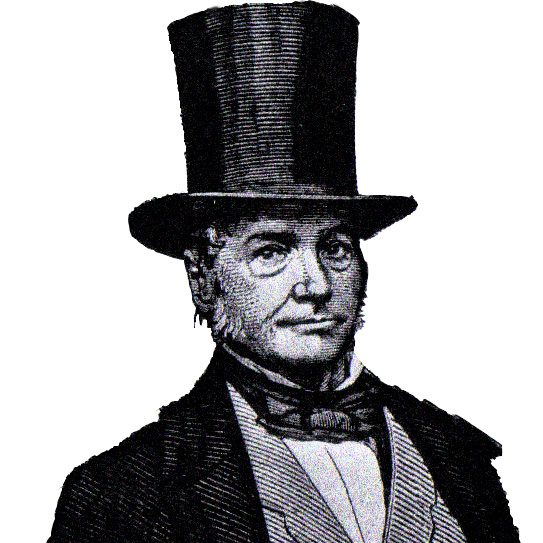
William Tait, the author of Magdalenism: An Inquiry into the Extent, Causes, and Consequences of Prostitution in Edinburgh (1842), was a 19th-century Scottish surgeon and social reformer. He served as a physician at the Edinburgh Lock Hospital, an institution dedicated to treating women with venereal diseases, many of whom were involved in prostitution. His medical practice provided him with direct insight into the health and social issues faced by these women, informing his perspectives on the causes and consequences of prostitution in Edinburgh.
Tait’s work in Magdalenism reflects a blend of medical observation and moral concern. He was critical of societal factors contributing to prostitution, such as poverty, lack of education, and inadequate social support, and he advocated for reforms, including the expansion of Magdalene Asylums to rehabilitate women engaged in prostitution. His approach combined empirical data with a moralistic tone, characteristic of the Victorian era’s social reform movements.
Below is a structured summary of its main points:
Purpose and Background
- The work aims to confront public apathy about prostitution and urge societal reform.
- It appeals to moral, religious, and social sensibilities to address what the author terms a “deadly pestilence” afflicting Edinburgh.
- Tait was a surgeon with firsthand knowledge from his time at the Edinburgh Lock Hospital.
Chapter Summaries
Chapter I: Extent of Prostitution in Edinburgh
- Definition: A prostitute is someone who habitually engages in sex work, not just isolated acts.
- Estimate: About 800 open prostitutes in Edinburgh; possibly over 1,000 additional “sly” prostitutes, including servants and seamstresses. According to the 1841 census, the population of Edinburgh was recorded as 133,692, comprising 58,642 males and 75,050 females.
- Locations: Prostitution was concentrated in specific districts such as the High Street, Cowgate, Grassmarket, and Canongate.
- Demographics: Many were young, some were married, and others were newly arrived in town.
- Occupations at risk: Dressmakers, servants, and bonnet-makers were particularly susceptible to clandestine prostitution.
Chapter II: Classes and Habits of Prostitutes
- Classes:
- Brothel-keepers: Often exploitative and driven by profit.
- Femmes galantes: Courtesans with more select clientele.
- Lodging-house prostitutes: Operated semi-independently.
- Streetwalkers: Most visible, least secure.
- Behaviours: Include lying, dishonesty, foul language, heavy drinking, and moral degradation.
Chapter III: Causes of Prostitution
- Natural Causes:
- Inclinations, pride, love of dress, idleness.
- Accidental Causes:
- Seduction, bad marriages, poverty, low wages, unemployment, intemperance.
- Lack of supervision and education, bad parenting, evening dancing, theatres, and Sabbath-breaking.
- Society’s reward for vice and lack of support for virtue.
Chapter IV: Consequences
- For Prostitutes:
- Mental and moral ruin, social alienation, poverty, disease (e.g. syphilis), and early death.
- For Society:
- Corruption of youth, dishonesty, family discord, spread of disease, and grief to families.
Chapter V: Suppression and Reform
- Suppression Strategies:
- Address root causes.
- Remove prostitutes from the streets.
- Empower police and magistrates to shut down brothels and penalise brothel-keepers.
- Reform Strategies:
- Expand Magdalene Asylums (e.g. in Aberdeen, Glasgow).
- Improve their management and success rates.
- Emphasise rehabilitation, not punishment.
Overall Themes
- Moral Crusade: Tait writes with a strong Christian moral outlook, blending pity for the women with condemnation of societal failings.
- Call to Action: He pleads for public involvement, greater surveillance, charitable intervention, and societal reforms to reduce the causes of prostitution.
 James McLevy