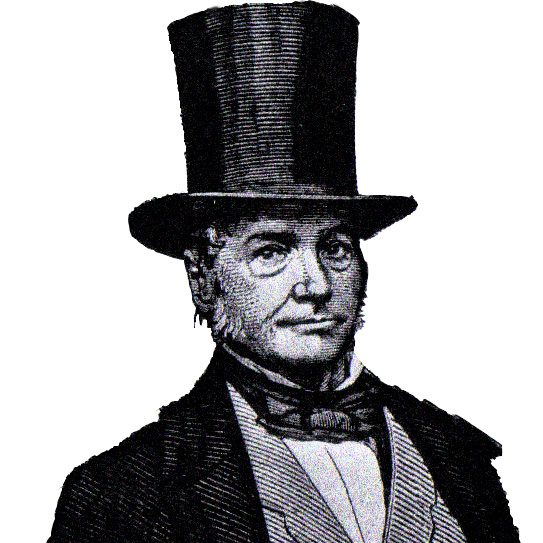
The 1852 article “Gross Blunder of the Police” recounts how Mr. G. A. Hutton was wrongly accused of pickpocketing in Edinburgh. Despite his complaints about mistreatment by McLevy and other police officers, an internal inquiry found no misconduct. The Lord Provost expressed regret but defended the officers, attributing any harshness to their extensive experience rather than intent. The case highlights the tension between police duty and public perception in false accusation incidents. Here is the full article
“The Gateshead Observer, after quoting the communication under this head, given in our last, has the following:-
Mr G. A. Hutton, of No. 79 Pilgrim Street, the young gentleman alluded to in the above letter, has received a communication from the Lord Provost, enclosing a report from the Superintendent of Police, who states:-
The lady who alleged that her pocket had been picked of her purse, containing some money, and who committed Mr Hutton, is Mrs Elizabeth M’Leish or Sutter, residing in 5 Rutland Place. She was accompanied to the Police Office by Miss Isabella Stewart, 5 Rutland Place, Miss Thomson, at Mrs Hunter’s, 26 Frederick Street, and Mr John Lauder, 9 East Register Street. The constable who conveyed Mr Hutton to the office is No. 80, William Smith. Lieutenant John Grant was on duty in the Police Office. The following officers were in the office while Mr Hutton’s case was under investigation-viz., Lieut. Alex. M’Lellan; Criminal Officers James M’Levie, John Murray, and William Shaw; Sergeant Alex. Chisholm; and Constables Daniel Munro, John Irvine, John Youdal, and Alexander Hunter.
I have respectfully to submit, that, apart from the complaint against M’Levie, and the alleged refusal of the lieutenant to give the name and address of the lady who committed Mr Hutton, the whole proceedings were the necessary consequence of the committal made by Mrs Sutter, and that, however much it is to be regretted that a gentleman of Mr Hutton’s respectability should have been so unpleasantly circumstanced, the police officers were in the proper discharge of their duty, and are not in any degree blameable or respon-sible.
I have carefully examined all the above-named officers, and have not elicited any evidence to prove that M’Levie used opprobrious language towards Mr Hutton-called him a pickpocket-or subjected him to any provoking indignities.
As regards the alleged refusal of the lieutenant on duty to give Mrs Sutter’s name, I am satisfied that the irritation and annoyance naturally occasioned by the painful position in which Mr Hutton was placed have caused his memory to be at fault in this particular. It is a fixed rule in the establishment at once to furnish accused parties, who make the request, with the name of the accuser, and of any other party connected with the case; and Lieutenant Grant positively assures me that the only name Mr Hutton asked for was that of M’Levie; and that he was immediately furnished with it.
The Lord Provost’s own letter is as follows:-
Edinburgh, September 8th, 1852. SIR,-On receipt of your letter of the 4th inst., I had
a meeting with the Superintendant of Police, and directed him to make a careful inquiry into the whole circumstances. He reported to me verbally, and afterwards in writing, the result of his inquiries. His letter. I enclose for your perusal, and I return the enclosures which you were so kind as to send me. I am satisfied that the superintendant is blameless in the whole circumstances, and that the police officer was bound, when the charge was made, to take you to the Police Office. This you do not appear to doubt. The real difficulty is in reconciling the two accounts of what took place in the Police Office. My own impression is, that’ active, experienced old officers, like M’Levie, do and say things which appear to them quite right and proper (from their their feelings having got much blunted by long practice in their vocation), but which, to an unjustly accused party, like yourself, appear to be rudeness of the most unpardonable kind. I believe this to be the real source of the difference.
I regret exceedingly that you should have been subjected to such annoyance, and am perfectly satisfied, as are all the police functionaries, that there was no ground for complaint against you. They all join in regretting that anything should have occurred to give you pain in the discharge of their duty.
1 am, Sir, your very obedient servant,
D. M’LAREN, L.P.
G. A. Hutton, Esq., Newcastle-on-Tyne.
It is sufficiently evident what the Lord Provost thinks of. M’Levie; and his Lordship is quite right in what he says of the infirmities of police-officers. But is it not therefore all the more desirable that an example should be made of an offender like M’Levie? That the lieutenant discharged Mr. Hutton without taking him before a Magistrate, is proof that he believed him to be perfectly innocent of the charge so recklessly preferred by Mrs Sutter; that convic-by tion, indeed, was his only justification of, taking upon himself the responsibility of a discharge; and it is intolerable that an officer, should be allowed to wag his scurrilous tongue against any one of her Majesty’s honest subjects. It forms, in truth, no part of the penalty even of a convicted thief to be tormented by the taunts of the officers who hold him in custody, much less should an innocent man (and every man is legally innocent until legally convicted) be exposed to such annoyance and injustice,
With the Lord Provost, we are inclined to acquit the police-superintendant of any blame; and the officer, also, who received Mr. Hutton into custody. But the superintendant is in error as to Mr Hutton’s memory. The lieutenant most certainly refused the lady’s name, and refused it ‘argumentatively. This was on the Tuesday. It was on the Wednesday that M-Levie’s name was required, and it was immediately given.
The admission made by the officers of police, as to the innocence of Mr Hutton, is as ample as, to every; one who knows him, it must be süperfluous; but from Mrs Sutter, the chief author of all this unpleasantness and wrong, some apology is yet due, both for her own sake and Mr Hutton’s”
 James McLevy