POLICE COURT-FRIDAY. (Before Bailie Johnston.)
BRITISH LIBERTY.
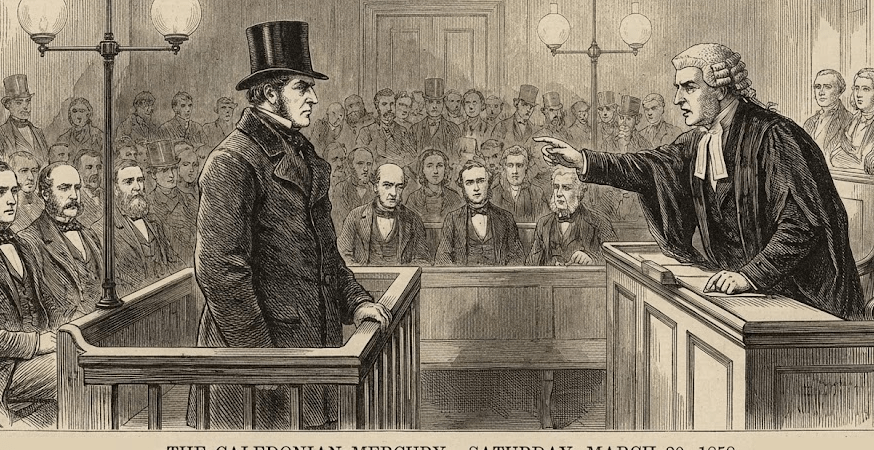
A well-dressed, neat little individual, named Wm. M’Dougal, was placed at the bar under the 155th section of the Police Act, which he was accused of infringing by having no fixed place of residence, leading a vagrant life, and consorting with thieves and vagabonds. The prisoner pled not guilty, and the case went to trial. Mr Bell appeared as counsel for the prisoner.
Mr Fallan, detective officer, deponed that, on going along Waverley Bridge on Wednesday last, he observed the prisoner in the company of a well-known thief, and that the prisoner, a minute or two afterwards, took to his heels, from which the depon-ent inferred that he bad seen some of the officers, as be bad been formerly warned to leave the town. Mr ANGUS, detective officer, substantiated the evidence.
Mr M’Levy, also a detective, deponed seeing the prisoner, in the beginning of February last, in the Exhibition of Paintings opened upon the Mound. A number of pockets had been picked there, and information having been lodged with the police, he was sent down to watch the thieves. He stationed himself in the lobby, and saw the prisoner enter, but observed him to do nothing; and on going out, he found a notorious Edinburgh thief waiting outside, whom he immediately set down as a confederate. He waited till the prisoner came out, and then cross-questioned him as to his antecedents, his mode of life, his residence, &c., to which he got no satisfactory answer. He searched his pockets, but found nothing particularly suspicious, and conveyed him to the Police Office, where he, along with the licutenants, warned him to leave the town. The prisoner mised to do so, and was dismissed; and since then there bad been no pockets picked at the Exhibition. He again saw the prisoner in the house of a notorious pickpocket in the Canongate, whither he had gone for some shirts which he was getting washed; and he asked him why he had not left the town, to which he, you know the prisoner is a thief?” “I am a good judge of thieves.” “But how can you recognise a thief from any other man?” “So many of them have come through my hands, that I know them at once.”
“But you don’t know anything positive about this man; you don’t know that he ever robbed anybody?” “No.” “Did you not once bring a man from Inverness, who turned out to be no thief? Had the city of Edinburgh never to pay damages for such a mistake of yours?” (Excitedly)-“No, never.” After some further cross-questioning, Mr RILEY confirmed the first part of M’Levy’s evidence.
Mr BELL then said, we were in the habit of talking about freedom-loving Britain, and he believed they had been silly enough to believe it. Every day there were tirades in the newspapers against the police espionage system in Naples, Paris, &c., but he was sure they could not get a worse case of such unlawful interference than the present. Here was a lad who had done nothing, except drawing down upon himself the suspicion of two detective officers. Not a thing had he done, and not a complaint could be laid against him; and yet, because the officers suspected him, he could be brought there, and be presented for punishment. He then recapitulated the evidence, showing that it had not been proved that there was any connection between the prisoner and the man standing outside of the Exhibition, or that the Bridge was a thief He bitcompanion likewise on the Waverley to show that the circumstance of his being found in a thief’s house proved nothing against the the prisoner, in-pre-mich as it was explained by the evidence itself that errand there was for his washed clothes; and his refusal to answer the questions of the detective likewise established nothing, as it was natural to re-fuse the impertinent questions of a man in plain clothes. The detectives could not get anything positive against the prisoner, and so they got up the negative complaint that he had no home. He hoped the law would yet be so reformed that positive crimes alone would be punished. The object of the statutes under which the prisoner had been indicted was evidently to get rid of well-known thieves, but this was not the case with the prisoner. Nothing was known of him at all, and to punish him would be an unwarrantable stretch of that infamous clause which had doubtless been smuggled into the Police Act. It put everybody at the mercy of the mere opinion of a man who said he knew a thief by sight.
The BAILIE observed that if it was found that the prisoner had infringed or was obnoxious to any part of that law, he was bound to punish. Recapitulating the evidence, he said he was satisfied that the prisoner had really been constantly with thieves, and leading a vagrant life. His promise to leave Edinburgh was a tacit admission of this, for why, otherwise, did he make such a promise? He passed sentence of ten days imprisonment. After the disposal of some trifling cases,
Mr BELL entered the bar and said- My Lord, shortly after leaving the Court, I was grossly attacked by Mr M’Levy-(sensation). He thought fit to say that I had told a falsehood, and that if I did so he would “snub” me. Now, I humbly submit that agents coming here to defend such parties as my client ought not to be subjected to such treatment. The BAILIE- Is that a correct statement, Mr M’Levy? Mr M’LEVY-Yes. Sir; he said that I took a man from Inverness that turned out to be no thief, and that’s false.
Mr BELL-My Lord, that’s not correct; I simply asked the question. The BAILIS remarked that it was very wrong for a public officer to behave himself in that way. He admitted there was somewhat of provocation, but that did not justify him in behaving so rudely. He hoped Mr Bell would look upon it as an unguarded expression, as flesh and blood would always he apt to mistakes. He hoped they would both forgive and overlook the occurrence. The other cases were unimportant.
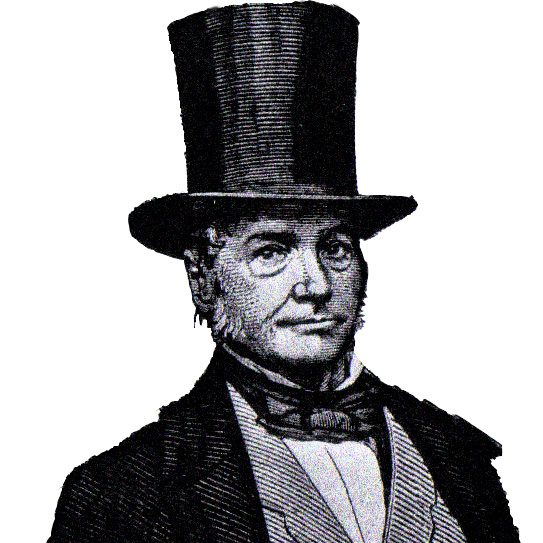
 James McLevy