The Dean Bank Institution was established in 1832 by a small band of women and worked from buildings in the Silvermills/Stockbridge area of Edinburgh from 1832 – 1912.
Prior to the establishment of the Institution, a number of women inspired by the work in England of Elizabeth Fry “began systematically to visit the female wards of the Edinburgh Prison”. They recognised, however, that many of the female prisoners quickly returned to prison as they found it difficult to find employment. Their solution was to establish the Dean Bank Institution, a place where girls could be taken out of close association with hardened criminals and trained for domestic service. The Institution’s fiftieth anniversary report noted:
“The difficulty of finding employment suggested the idea of a “Home”, where those really anxious to do well might be taught and fitted for the service of employers, willing to give them an opportunity of recovering their position in life. A house at Dean Bank was taken, and in 1832, the Institution was opened. Entrance was entirely voluntary, and the expenses were met by the contributions of those interested, and the proceeds of washing and sewing done by the inmates”
It is important to recognise that the establishment of this Institution marked a significant step forward in social reform, as it was the first such refuge in Scotland where its primary objective was the reformation of female prisoners (Ralston, 1984).
The Institution was run by a Ladies’ Committee, who were also actively involved in the daily work of the home. Members of the Committee were well-known and some not so well known social reformers and nineteenth century liberal political activists, including Eliza Wigham, Louisa Stevenson, two sisters, Kate and Barbara Bell McLaren (members of the McLaren Family) and Elizabeth (Betsy) Fraser. Many of these are documented as key active reformers in the 1800’s not only for prison reform but also for the anti-corn laws, right to vote, the education of women (including law and medicine) women’s suffrage movement, anti-slavery movement, the right for education for all, the establishment of secular education. From its early days its Directors were the Lord Provost of the City, the Sheriff of the County, the Dean of Guild and other influential men of the City, including the Governors of Edinburgh Jail.
Elizabeth Fry herself visited the Institution in 1834 and it was one of the first members of the Britain-wide Reformatory and Refuge Union set up by the social reformer Mary Carpenter in 1852. The 1875 annual report of the Institution noted Dr. Barnardo’s comment that the Dean Bank children were “a set of girls …. that it does one’s heart good to look at”.
Due to receiving numerous applications for admission, a second Branch Institution was opened at Boroughmuirhead in 1848. Dean Bank’s focus was by then developing towards being a Preventive Institution, taking girls off the streets and trying to train them for domestic service in an environment that gave them a sense of family life. Boroughmuir, on the other hand, was a Reform Institution, taking girls who had already been brought before the courts.
To more accurately reflect its work in 1870 at the suggestion of Mr. Smith, the Governor of Calton Jail, its name changed from the “Dean Bank Institution for Juvenile Delinquents” to the “Dean Bank Institution for the Religious, Moral, and Industrial Training of Girls”.
Source TalkingScot.com
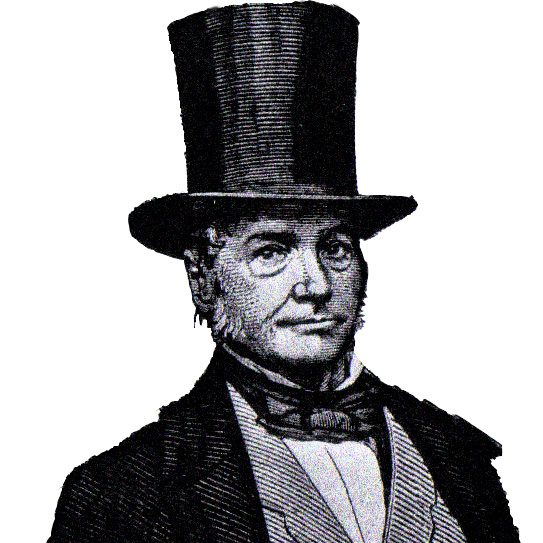
 James McLevy