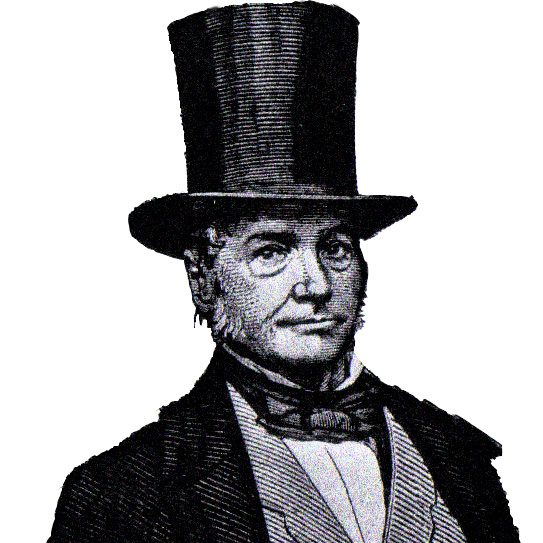

James M’Levy, the Edinburgh detective, whose name was familiar throughout Scotland, as the author of “Curiosities of Crime in Edinburgh,” died at his residence in Richmond Street, on Saturday afternoon, at the advanced age of 80 years. The deceased was long a member of the Edinburgh detective police staff. About fourteen or fifteen years ago failing health necessitated his retiring from active service, but till within eighteen months of his decease he was often usefully employed in proving convictions against offenders, who, once detected by M’Levy, could be recognised by him again at whatever distance of time—identification in this way being one of M’Levy’s chief characteristics as a detective. He published two volumes, both of which went through several editions. One was entitled “The Sliding Scale of Life,” and the other, which was issued from the press in 1861, “Curiosities of Crime in Edinburgh during the Last Thirty Years.”
In the latter volume the following is given by the editor:— “Mr M’Levy was born in the parish of Ballymacnab, County Armagh, in Ireland, his father holding the position of a small farmer. Having received a suitable education, at the age of thirteen he was apprenticed to the trade of fine linen weaving, at which he continued till he was seventeen, when he came over to Scotland. Having remained for two years at Gatehouse-of-Fleet, he came to Edinburgh, where he was first employed by Mr Wallace, a considerable builder at that time, and subsequently by Mr Walker, a son in-law of Mr Wallace’s. Latterly he went into the services of Mr Robert Paterson, builder and tax-surveyor. During all this time he conducted himself with honesty and propriety, occasionally displaying freaks of humour and instances of that ingenuity which so signally marked his subsequent career. In particular, Mr M’Levy had so recommended himself by his uniform steadiness to Mr Paterson that that gentleman, who probably saw other qualities in him capable of being turned to better account than in the daily toil of a labourer, advised him to enter the police, and promised to get Captain Stewart to accept his services.
He immediately agreed to this proposal, and Mr Paterson having succeeded in his application, he entered the force in August 1830 as a night watchman. In this capacity he acted till 1833, when, having taken fever, he was removed to the Infirmary. Though at one time dangerously ill, it was not long till, through the means of a strong constitution, he began to show symptoms of amendment. After recovering from this illness, he was told by the doctor that he must renounce his night work, and he accordingly went to Captain Stewart with the view of resigning. That gentleman, who had a quick eye to intelligence, and knew where to look for it, offered M’Levy promotion to the staff of detectives. He was accordingly appointed, in 1833, to that situation he has filled with so much honour to himself and advantage to the public. His name soon came to be known everywhere, and for a thief or robber to be ferreted out or pursued by M’Levy was held equal to his being caught.
We have only to look to the number of his cases, 2220, to form some idea of the vast amount of property he has been the means of restoring to its owners, of the number of offenders he has brought to justice, and of the impression of his influence in the observed diminution of crime. Other causes have, happily, tended to this last result; but it cannot be denied that, in so far as regards Edinburgh, much of that effect has been due to his exertions.”
In St Patrick’s Catholic Church yesterday, reference was made during the service to the death of Mr M’Levy, described as having been “one of the most respected and trustworthy members of the Edinburgh Detective Force.” He was married in Ireland at a comparatively early age, but his wife died soon after M’Levy came to Edinburgh.
Edinburgh Evening News Monday December 8, 1873
 James McLevy