On Thursday several rather smart-looking and well-dressed men were placed at the bar of the Police Court—five accused of attempting to pick pockets in the show yard, Warrender’s Park—and two with being found under very suspicious circumstances at the Railway Depot. The first gave his name as William Jones, though there is reason to believe he also takes the cognomen of Bills. He described himself as a silversmith, who had come in search of employment by the mail from Carlisle to Edinburgh, and reached this city on Tuesday morning; he said that he went to a house with a female, whom he did not know—neither was he aware of the street in which the house was situated—and breakfasted in a tent at the Show. Here he was soon descried by M’Levie, the active criminal officer, who observed him to dip into the pockets of several gentlemen, but apparently without obtaining money. As the mode in which this system of slight-of-hand is practised seems ingenious and novel, we shall detail it nearly in M’Levie’s own words when on oath as a witness:—He saw the prisoner, with a cloak over his left arm, thrusting himself into crowds. He pressed with his left arm, on which the cloak hung, against the breast of the party intended to be robbed, and at the same time put his right hand into the waistcoat pocket of the victim The cloak served as a screen to the operations of the right hand, and the pressure on the breast tended to render the pocket more accessible. This youth did not seem more than 20 years of age; and it was evident he had been previously before a Police Magistrate. He displayed great self-possession during the investigation; but as soon as the Sheriff sentenced him to 30 days’ imprisonment, he began to cry like a child, and exclaimed that he would instantly leave town if allowed to depart. It is worthy of remark, that the friends of this youth, short as his stay had been in Edinburgh, managed to employ an agent to defend him. John Williams, a tailor from Birmingham in search of work; James Knight, printer, from Covent Garden; Robert Jardine, grinder of cylinders for silk mills; and John Thomson, cabinet maker from Leicester, were next put to the bar, accused of similar charges with Jones. These designations are as given by themselves, but there is reason to believe the names are fictitious. On Jardine, when brought to the Police Office, was found a memorandum of all the fairs to be held in Scotland during the present month; and when Thomson was examined by the officer on duty, he stated, that he had been a voyage to the West Indies. On being asked to name the port there into which the vessel put, he replied the Cape of Good Hope. He was then asked to name the island, and he said New Brunswick. This person when at the bar put on a bold air, and pointedly refused to answer any questions. The evidence of M’Levie and different officers established the fact that the four, acting in concert, were seen to “sound” various pockets, and to insert their digits thereinto, on precisely the same principle followed by Jones. They were all convicted, and each sentenced to thirty days’ imprisonment.
Caledonian Mercury Saturday, Aug. 6, 1842
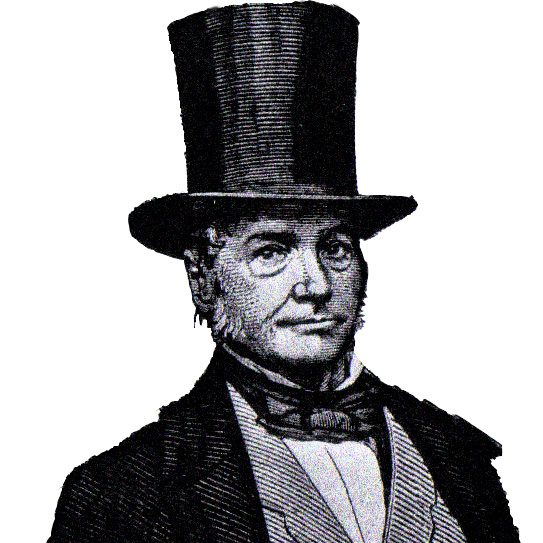
 James McLevy