The Court met on Thursday for the first time after the autumn circuit. The judges present were the Lord Justice Clerk, Lord Mackenzie, and Lord Medwyn.
Nov. 5.
The Court met again to-day at ten o’clock.
CULPABLE HOMICIDE OF THE COMMON EXECUTIONER.
James Edey, broker, Edinburgh, was placed at the bar, charged with the crime of culpable homicide, in so far as on the 12th of August last, in or near the Old Fishmarket Close, or in the Cowgate, or in the shop of a spirit-dealer there, he did wickedly and feloniously attack and assault the deceased John Scott (common executioner to the city), and did strike him one or more blows on his side or back, and on his head or neck, or other parts of his person, whereby he was mortally injured, and immediately, or soon thereafter, died in consequence thereof.
The prisoner, who was seated among the audience (having been admitted to bail), took his seat at the bar when the case came on, and pleaded not guilty.
The case then went to trial.
John Ross, Canongate, deposed that he recollected being in the Cowgate on the 12th of August last, about half-past eleven in the forenoon, when he observed the prisoner very much intoxicated, and saw him strike two men, passengers, in the street, while going towards the Fishmarket Close, up which the prisoner proceeded for about 70 yards. The deceased, John Scott, was standing at the foot of that close, when the prisoner came down again and went forward to him, and said with an oath, “Who are you?” Scott told him to go away, and that he had nothing to say to him. The prisoner then struck him on the temple, above the ear, with the back of his hand, but it did not seem to be a severe blow, and would hurt nobody. Scott staggered across the street to Mr. Thomson’s shop, apparently to get out of his way, and was followed by the prisoner, who made up to him before he reached the door of the shop. The prisoner then gave Scott a second blow on the side of the head, when he took refuge in Mr. Thomson’s shop. Witness followed him into the shop about two minutes after he had entered it, when Scott becoming weak fell into witness’s arms, saying that he had done the prisoner no harm. He was laid between two chests, and they did not know whether he was dead or alive. The deceased was then carried by some men to his own house.
Frances Wright stated that she saw the prisoner going up the middle of the Cowgate on the forenoon of the 12th of August, very much the worse for liquor, swearing and acting in an insane manner. Saw John Scott crossing the street from the Fishmarket Close as Edey came up, when the latter gave him a push on the middle of the back. It was more a push than a blow; and she could not say whether his hand was closed or not. Scott turned round and said something which witness could not hear; and then went towards Mr. Thomson’s shop, followed after the interval of a minute by the prisoner, by whom Scott was overtaken at the door of the shop, where he received a knock on the back of the head from the prisoner with his fist. Scott did not appear to be in the least affected by the blow, and went into the shop, but slipped down immediately afterwards, and lay on the floor for about five minutes. No person offered any assistance to the deceased, till a boy went for his wife, on whose arrival the man in the shop came forward to lend his aid. There was a crowd at the shop door, but no one offered any assistance. Edey asked three times what he had done, and then went up the Cowgate. Scott never spoke afterwards, and the crowd said that he was not hurt, but was merely in a fit.
Mr. Peter Cowieson deposed that he saw Edey in the Cowgate, and acting in an outrageous manner, as already described. The prisoner, seeing Scott at the foot of the Fishmarket Close, after saying some words to him, gave him something like a shove on the breast. Scott seemed to be anxious to take refuge in Mr. Thomson’s shop, and witness stepped aside to allow him to enter. Scott, on entering the door, was overtaken by Edey, who struck him a blow about the back of the head or shoulders. Edey then came out of the shop, and witness saw Scott leaning against a cask for support, but he immediately afterwards sank on the floor. He never spoke afterwards, but one or two men rendered him assistance. Edey came back about a minute afterwards; but as witness had been warned that he was mad, he kept out of his way, and did not hear some words that he uttered.
Cross-examined.—Edey was greatly excited. He did not see where Scott was struck while at the shop-door, but it was upon the back of the head, or the back of the neck, or upon the shoulders. He could not say that Edey’s hand was closed at the time.
By the Court.—He observed that Scott appeared to be in a debilitated state of health, but he saw no symptoms of inability to stand or walk. A minute did not elapse between the time that Scott seemed to be in a sinking state after he had received the blow and when he fell down.
Robert Thomson, hawker, deposed that he was in Thomson’s shop in the Cowgate on the 12th of August, when he saw Scott enter it hastily, pursued by the prisoner, who gave him, on entering it, a stroke or a push upon the neck or shoulder. Scott then leaned on the witness, and seemed to require support to keep him from falling. Witness heard him say to Mr. Thomson, “What does the man mean?” And when he left the shop, Scott seemed to be in a very feeble condition.
Mrs. Scott, widow of the deceased, stated that she resided with him in the Fishmarket Close. Her husband had been in very delicate health for some years, and used to complain of his head and breast. He left the house on the 12th of August in a very weak condition; but, in reply to a question, said that he was better that day than for some time previously. About a quarter of an hour afterwards she went to Mr. Thomson’s shop on being sent for, and found her husband lying there, but he did not speak afterwards, and she could not say whether or not he expired while being carried home.
Cross-examined.—Recollected having been told by her husband on the 29th of July, that he had been struck by a young man of the name of Wilson, and he continued after that, till his death, to complain of his head.
By the Court.—He had complained constantly of headache since the beginning of the month of July, but seemed to be weaker after having received the blow, of which he had complained to her.
Robert Kooney, police officer, deposed to the apprehension of the prisoner, who was in a very excited state at the time, and did not appear to know what he was doing.
Professor Miller deposed that the report produced, of date 13th August, had been drawn up by himself, in conjunction with Drs. Weir and Tait, after an examination of the body of the deceased John Scott. The learned professor then read the report, which stated that they had found the cause of death to be, in their opinion, extensive extravasation of the blood of the right ventricle of the brain, and of the lower and back part of that organ, and of the upper part of the spinal cord. They were of opinion that the extravasation of the blood was such, with regard to its site and nature, as to cause immediate death; and they had still further to state that the appearances found were such as in all probability would be produced by a heavy blow inflicted on the head or neck. The left kidney they found ruptured in its upper part, and the entire organ preternaturally gorged with blood, and likely to have been produced by a blow or kick over the part; but they did not consider it to be so immediately connected with the cause of death. The other organs presented no evidence of disease.
Professor Miller was then examined further.—There was no appearance of organic disease on the body of the deceased. One blow of the hand or foot was quite sufficient to have caused the injury on the brain, and also on the ruptured kidney. If the blow caused the extravasation of the blood, death must have been immediate, and both the extravasation and the injury of the kidney appeared to have been quite recent.
Cross-examined.—The immediate cause of death was extravasation of the blood of the brain, which, however, was sometimes occasioned by other causes than external violence, such as by simple apoplexy, more especially if disease of the vessels in the brain previously existed. In apoplectic patients, it was frequently caused by excitement. Scott did not appear to be a strong or healthy man, and was apparently much debilitated, his body being evidently that of a delicate man. The injury of the kidney might have been produced by a fall if he had fallen heavily upon a hard or sharp substance, or it might have been the result of an injury inflicted over the ruptured part.
By the Court.—The injury on the kidney might have been inflicted as recently as the extravasation of the blood of the brain, which was the cause of the death. He saw no appearance of disease in the vessels of the brain, and if it had existed, he must have observed it. His impression was that the extravasation of the blood had been the result of injury, and not of disease.
Dr. Weir stated that he knew the deceased from having seen him at the New Town Dispensary. He complained of general debility, and the medical men suspected cancer in the stomach, but the report contradicted this supposition. The injuries found on his body, after death, had nothing to do with his former complaints. The appearances on the brain and kidney he attributed to a blow. His circulation was languid, and he was altogether in a debilitated condition.
EXCULPATORY EVIDENCE.
A declaration by the prisoner, made before Baillie Mack on the 13th August, was then read, from which it appeared that he was 39 years of age, and was married. For the last seven years he had entirely abstained from the use of spirituous liquors, but having unfortunately been induced by some friends to partake of brandy, he went after that from one public-house to another, till he at length became so intoxicated that he had no recollection of what had taken place on the day previous (the 12th). He stated that he knew Scott, and declared he had no ill-will towards him, and repeated his assertion that he had no recollection of the occurrences of the previous day.
James M’Levie, criminal officer, stated that he had known the prisoner for the last seven years, and had always found him to be a quiet, honest, and sober man. He was not of a quarrelsome disposition, and was very charitable to the poor. Witness knew the deceased, who had long been in a weak state of health, and appeared to walk with difficulty. Recollected a complaint having been made on the 29th July against a man of the name of Wilson of an assault on Scott, which was not tried. He heard Scott say that he had been severely hurt by Wilson, and he regretted that he had not been punished by the magistrate. He said that he had been struck on the face and head, and also that he had been kicked on the leg by him.
John Aiken, keeper of a temperance coffee-house, High-street, deposed that he had known the prisoner for nearly nine years, during which he had considered him to be of an obliging nature, and that he was a kind, warm-hearted man; and if remarkable for one thing more than another, it was for his benevolent and charitable disposition. He took the pledge of the Total Abstinence Society from witness in 1839, since which he had always borne the character of a strictly sober man; and he had never heard a breath of his having ever violated the pledge, and it was with much horror, and great astonishment indeed, that he had heard of the distressing circumstance which had brought the prisoner to the bar of the court.
Mr. Patrick Barker, commissioner of police, also bore testimony to the good character of the prisoner for the last nine years.
This closed the evidence in the case.
Mr. Davidson, advocate depute, then addressed the jury, stating that the case was of so clear and conclusive a description, that he thought the guilt of the prisoner could hardly admit of a doubt. He had nothing to say against his general character, to the excellence of which ample testimony had been borne; but if the facts of the case were clear in themselves, his previous character could have no effect on the guilt of the prisoner. It seemed to be the aim of his learned friend on the other side to prove that Scott was in a weak and debilitated state of health when the assault took place, and to deduce from that fact an alleviation of the prisoner’s guilt. But if one person assaulted, to however small an extent, another individual in delicate health, and inflicted injuries sufficient to cause death, the person committing it was undoubtedly guilty of culpable homicide; and even the weakest child, just born, if from any want of care, or by any improper act, its death was caused before its natural time, the person so causing its decease was also guilty of culpable homicide. The learned gentleman then went over the evidence, and concluded by saying that no doubt could exist that the death of the deceased had been caused by the prisoner in the manner libelled.
Mr. Moncrieff replied in behalf of the prisoner, and said that he had thought it right to prove that, at the time of the assault on the deceased, the prisoner was in a state of complete and utter intoxication, and that the exhibition which he had made was, in the first place, by no means a habit of his; and that, in the second place, the death of the unfortunate man was in no degree connected with the existence of the least animosity or hostility entertained towards him by the prisoner. The learned counsel then referred to the allegation of the indictment that the blow which had caused death was given by the fist, and that the fatal injury had been caused in that manner; and said that, unless the jury believed that the blow had been given by the fist, of which he thought there was no sufficient evidence, they could not return a verdict according to the terms of the indictment. Mr. Moncrieff then contended that it had not been proved that death had been caused by any of the blows which had been given the deceased, and said that it was quite within the range of possibility that it might have been occasioned by natural causes, or from the state of excitement into which he had been thrown at the time. There were some cases which come so near casualty and accident that it was impossible to draw the line, and that case, he thought, came within the category. He submitted, in conclusion, that even if the jury found that the mode of death was by a blow of the fist, yet, looking to the whole circumstances of the case, it was one of accident and not of culpability, or rather of a limited degree of culpability, and could not be considered a crime of the description libelled.
The Lord Justice Clerk then addressed the jury, and said it was necessary to explain that while a great deal of what had been urged in behalf of the prisoner was quite true, and that he had no personal animosity towards the deceased, and had no intention to produce a fatal result, that was only what must occur in every case of culpable homicide. If there was any intention to kill, whether the man was drunk or sober, or if there was any intention to inflict such serious injury as was likely to be the cause of immediate death, the proper charge, in such a case, would be one of murder. A charge of culpable homicide did not imply the slightest intention to produce the result that followed; and there were cases even where the party was guilty of that charge, although he might not be aware of the existence of the individual he had killed, as, for instance, in the case of a carter who was seated upon his cart, instead of being at the head of his horse, and who, by his carelessness, ran over the child whom he did not see. In short, wherever there was the neglect of precaution such as to cause death, it made a case of culpable homicide, because death had followed from the man’s act, and because the man was not free from blame. In the case of death from a blow, the individual might not have anticipated that the blow given would have caused death; but it was enough that in striking the blow he was not acting in self-defence—that he was not justified in what he did—and that he was to blame in the attack or assault he made, and that death followed from the blow which he had given—to make a case of culpable homicide. Of course the jury would see at once that a great many of the considerations arising out of such cases, and involving the degree of blame which attached to the party, had some connection with the punishment that would follow; but unless the party was free from blame,—unless they could say that he was not guilty of the act which caused death,—the party was responsible for the death of the individual. If the person who struck the blow was not free from blame—if he was not justified in what he did, it was of no consequence whether the blow which had caused death might not have produced such a serious result upon a more robust frame. The man had died in consequence of the blow, and the question was, whether or not the individual was free from blame in giving that blow? It had been urged, though not as a justification of his conduct, that the prisoner, previously a man of unquestionable sobriety, of most exemplary habits, and extremely charitable and benevolent, was in such a state of intoxication that he did not know what he was about; but none would contend that a man was to be allowed to run riot in the streets, assaulting every one that came in his way, because he was drunk; and the question, therefore, whether a man was drunk or sober, was generally of importance only with reference to the feelings and motives which had led to the assault. His lordship after some further observations, referred to the evidence in the case, and concluded by repeating that the question simply came to be, whether the prisoner was free from blame in having struck the blow which caused the death of the deceased, and if they were satisfied that death had been the result of the blows inflicted?
The Jury then retired, and after an absence of about five minutes, returned, with a verdict finding the prisoner Guilty as libelled, but recommending him most strongly to the leniency of the Court.
Their Lordships then consulted together for a short time, at the end of which, The Lord Justice Clerk said that the Court were very anxious to give as much weight to the recommendation of the jury as possible, and with that view their lordships thought it better to delay pronouncing sentence in the case till Monday.
The Court then adjourned.
The Standard Tuesday, Nov. 9, 1847
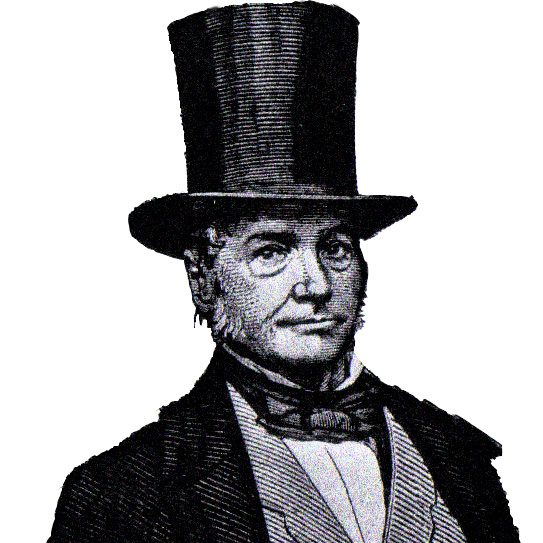
 James McLevy