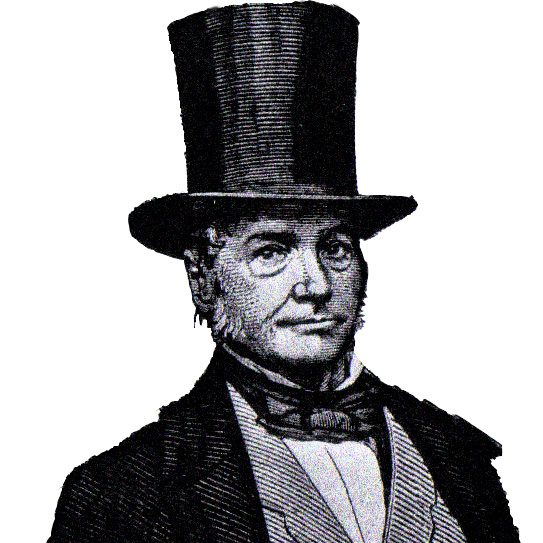
Henry Gudge, or Henry Drummond Gudge, schoolmaster, lately residing at Corbiehall, Borrowstounness, was charged alternatively with the crime of robbery or theft; in so far as on the 20th January last he did, on the public road leading from Bo’ness to Falkirk, attack Samuel Taylor, and by force or violence take from his person a parcel containing L.200 in bank notes, the property of George Paterson & Company, or did theftuously take said sum from Taylor’s person or custody. The prisoner pleaded Not Guilty.
From the evidence it appeared, that the prisoner was aware of the boy Taylor, who is his nephew, being employed by Mr Anderson, of Messrs Paterson & Co. to carry money to the Commercial Bank’s branch at Falkirk; that on the day the crime was committed he waited for him and went along with him a considerable way, questioning him regarding the parcel, &c. and, on getting to a solitary part of the road, he asked the size of it, and on the boy putting his hand into his breast, the prisoner snatched it suddenly from him; the boy called “robbery, assistance,” and followed prisoner taking hold of his coat, but he threw the boy to the ground, and made off over a wall.
The prisoner came to Edinburgh, and remained some time in Mackay’s eating-house in Bristo Street, and occasionally in the house of a Mrs Frater, Grange Lane, for about two months, under the assumed name of Drummond, until, on the 16th March, he was seen in the house of Mackay, by Jane Williamson, a former pupil of his, from Grange Pans, who returned on the 20th along with another girl to Mackay’s, when the prisoner told her in private not to call him Gudge there, but Drummond. He then spoke to her about Mr Anderson and the money. Said he had always prayed he might get something to support him in his grey hairs, and that he wished to take it from Mr Anderson, because Mr A. had robbed him. After that conversation, the girl Williamson went and gave information to the police, and M’Levie, the criminal officer, and Sutherland, a day patrol, took the prisoner into custody, when L.168 in notes was found on his person, partly loose in his pocket, and part in two stone and one glass pint bottles, through the latter of which the notes were distinctly seen. In his declaration the prisoner admitted having accompanied the boy Taylor, but that he left him by the way to return home, and that he found the parcel shortly afterwards, and resolved to appropriate the money.
The evidence was so perfectly clear, that the only difference between the Counsel for the Crown, (Solicitor-General) and the young gentleman (Mr Cleghorn) who appeared on behalf of the prisoner, was as to whether there was such a degree of violence used as to amount to the crime of robbery or was merely a case of theft.
The Jury unanimously found the prisoner guilty of robbery, and, the punishment being restricted, the Court awarded sentence of transportation for fourteen years.
Caledonian Mercury June 18 1840
 James McLevy