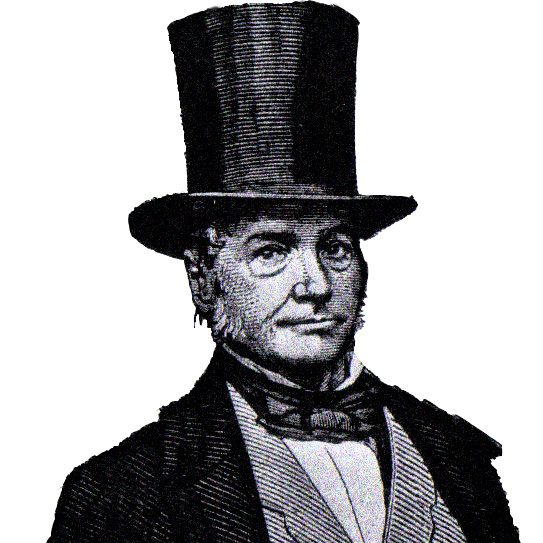
Edinburgh in James McLevy’s lifetime was home to reformers, writers, doctors and police officers whose work helped shape Victorian Scotland. The articles below are arranged by the year of each person’s first significant Edinburgh connection during or close to McLevy’s police career, rather than by birth date or the publication date of the website article.
The years are a guide to when each figure was active in, arrived in, or became notably associated with Edinburgh. Some had earlier connections to the city. The link text matches the title of the article on this website.
People of McLevy’s Edinburgh: a chronology
1825 — Sir James Young Simpson (1811–1870). Arrived in Edinburgh to study medicine; later pioneered the obstetric use of chloroform.
1828 — Captain James Stewart, Superintendent of Edinburgh City Police 1828 to 1842. Led the police when McLevy joined the night watch and helped advance his career.
1837 — Dr Thomas Guthrie. Came to Greyfriars in Edinburgh; became a leading campaigner for the city’s poorest children and ragged schools.
1837 — Frederick Hallard, Sheriff-Substitute. Returned to Edinburgh for legal studies; later served as a sheriff-substitute.
1840 — The Witness Newspaper. Explore Hugh Miller’s influence as editor of this Edinburgh newspaper, founded in 1840.
1841 — Charles Dickens. The novelist’s Scottish visits and his associations with Edinburgh.
1842 — William Haining, Superintendent of Edinburgh City Police, 1842 to 1848. Succeeded Stewart and oversaw the police during a formative part of McLevy’s career.
1848 — Richard Moxey, Superintendent of Edinburgh City Police, 1848 to 1851. Oversaw the force during the celebrated arrest connected with the Bermondsey murders.
1851 — Thomas Linton, Superintendent of Edinburgh City Police 1851 to 1878. Took charge during McLevy’s later years in the force and the period of licensing reform.
1853 — Dr Joseph Lister: The Father of Antiseptic Surgery and His Edinburgh Connection. Arrived to work with surgeon James Syme at the Royal Infirmary.
1853 — John Gray, Greyfriars Bobby owner. Joined Edinburgh police in February 1853; his death in 1858 lies at the heart of the Bobby story.
1853 — John Sutherland, police officer. Joined the force in January 1853 and served with McLevy on arrests.
1855 — Dr. Thomas Laycock (1812–1876). Became Professor of the Practice of Physic at the University of Edinburgh.
1859 — Jules Verne. Reached Edinburgh on 26 August 1859, during his first Scottish journey.
1862 — Dr Henry Littlejohn. Appointed Edinburgh’s Surgeon of Police and Medical Officer of Health, though his local medical connections began earlier.
A wider Edinburgh story
These lives overlap with wider themes explored on this site: the changing police force, medical innovation, poverty, ragged schools and the city’s international literary reputation. See also Biography and Victorian Edinburgh.

